
As I stood at my kitchen counter, colorful ingredients sprawled out before me, a wave of creativity washed over me. It’s amazing how just a few fresh vegetables can inspire such a vibrant dish like Vegetable Gimbap. This delightful Korean rice roll lets you tap into your culinary imagination, mixing and matching fillings to suit your taste. Not only is it a healthy choice, packed with nutrients, but it also comes together in a flash—perfect for those busy weeknights or quick lunch prep. Plus, with each roll tightly wrapped in seaweed and brimming with flavor, these gimbap rolls are bound to impress at your next gathering or picnic. Ready to dive into a world of delicious possibilities? Let’s get rolling!
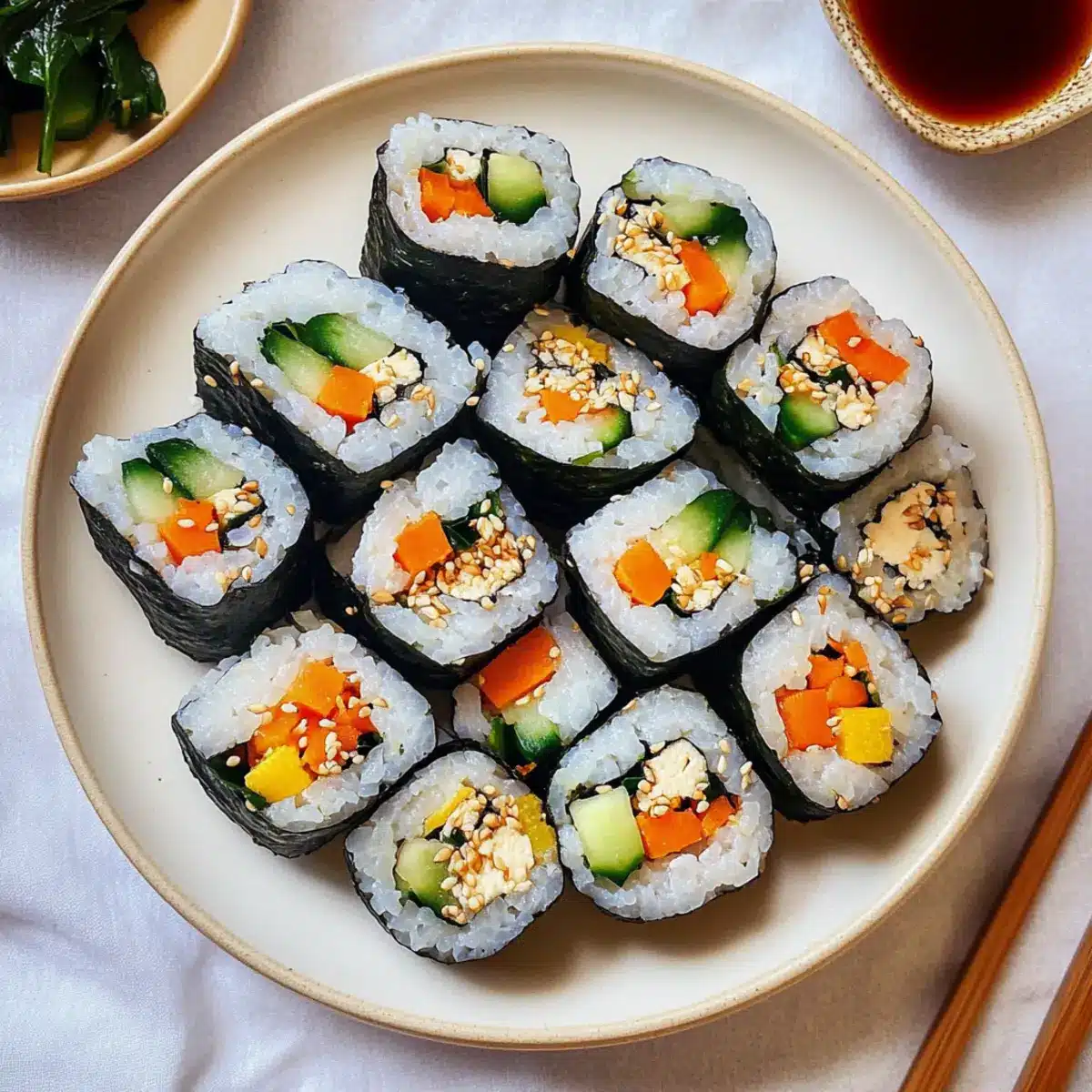
Why choose vegetable gimbap today?
Easy to Customize: You can create your gimbap using any vegetables you have on hand, making it a fantastic way to reduce waste and utilize leftovers.
Quick Meal Prep: Perfect for busy weeknights, this recipe takes minimal time to prepare and can be whipped up in under 30 minutes!
Healthy Satisfaction: Packed with vitamins and nutrients, vegetable gimbap is a wholesome alternative to fast food, ensuring you feel great after every bite.
Great for Sharing: These vibrant rolls are visually appealing and perfect for parties or picnics, ensuring they’ll be a hit with family and friends.
Perfect for Any Occasion: From a quick lunch to a fun dinner party snack, vegetable gimbap fits seamlessly into any meal plan. Explore more about making your meals exciting with simple yet delicious ideas!
Vegetable Gimbap Ingredients
Get ready to roll with these simple yet flavorful ingredients!
For the Gimbap
- Short-Grain Rice – Use this type for the perfect sticky texture, crucial for rolling.
- Seaweed Sheets – Choose high-quality nori for a delightfully fresh taste that holds everything together.
For the Fillings
- Carrot – Adds a sweet crunch; cut into long, thin strips for even cooking.
- Swiss Chard Stalks – Offers a unique flavor and crispness; feel free to substitute with bell pepper if preferred.
- Persian Cucumber – Brings freshness; you can swap it for a regular cucumber or zucchini if needed.
- Spinach – This leafy green adds nutritional value; sauté until wilted for best results.
- Egg – Provides creaminess and protein; prepare a simple omelette and slice it thin. Substitute with tofu for a vegan option.
For Flavor
- Sesame Oil – Drizzle to enhance flavor and give your gimbap a beautiful shine; rub it on the outside for extra taste.
These ingredients will ensure your vegetable gimbap turns out deliciously every time, and you can customize them to match your pantry!
Step‑by‑Step Instructions for Vegetable Gimbap
Step 1: Cook the Rice
Rinse 2 cups of short-grain rice under cold water until the water runs clear, then cook in a rice cooker according to the manufacturer’s instructions. Once cooked, drizzle in 1 tablespoon of sesame oil and 1/2 teaspoon of salt, gently folding the rice to mix. Leave the rice to steam on the warm setting while you prepare the fillings, ensuring it remains sticky and easy to roll.
Step 2: Prepare the Fillings
While the rice is cooking, slice 1 carrot and 2 Swiss chard stalks into long, thin strips, and cut 1 Persian cucumber into wedges. In a bowl, set aside these colorful veggies for assembly. Additionally, fry 2 eggs in a non-stick skillet to create a simple omelette, then slice it into strips. These fresh ingredients will bring vibrant flavor to your Vegetable Gimbap.
Step 3: Sauté the Carrot
Heat 1 tablespoon of olive oil in the same skillet over medium heat. Add the carrot strips and cook for about 3-4 minutes, stirring often, until they are soft yet still have a slight crunch. Once done, transfer them to a plate to cool. This step adds a beautiful sweetness to your gimbap while keeping the texture delightful.
Step 4: Sauté the Spinach
In the same skillet, add a handful of spinach and sauté for 1-2 minutes until wilted and the moisture evaporates. Stir occasionally, ensuring the spinach cooks evenly and becomes bright green. Afterward, remove from heat and let the spinach cool slightly. This adds nutritional value and a fresh flavor bite to your Vegetable Gimbap.
Step 5: Assemble the Gimbap
On a bamboo sushi mat, place a sheet of seaweed, shiny side down. Spread a thin layer (about 1 cup) of sticky rice over 80% of the seaweed, leaving an edge free at the top. Arrange the cooled carrot, Swiss chard stalks, cucumber, spinach, and egg strips across the rice at the bottom edge, layering for visual appeal. Get ready to roll!
Step 6: Roll the Gimbap
Using the bamboo mat, start rolling the gimbap away from you, tucking the fillings in tightly as you go. Apply gentle pressure to ensure the roll adheres, continuing until you’ve reached the free edge of the seaweed. Seal the end with a little water if necessary; this step is crucial for keeping your Vegetable Gimbap intact.
Step 7: Slice the Roll
Once rolled, place the gimbap seam side down on a cutting board. Rub a little sesame oil on the outside for an added touch of flavor and shine. Using a sharp, wet knife, slice the roll into 8-10 pieces, wiping the blade between cuts to prevent sticking. This ensures clean, beautiful pieces ready for serving.
Step 8: Serve and Garnish
Arrange the sliced Vegetable Gimbap on a platter and sprinkle with sesame seeds for a nutty finish. Serve with soy sauce or your favorite dipping sauce on the side to complement the delightful flavors. Whether for lunch or a tasty snack, these vibrant rolls are sure to impress and satisfy!
Make Ahead Options
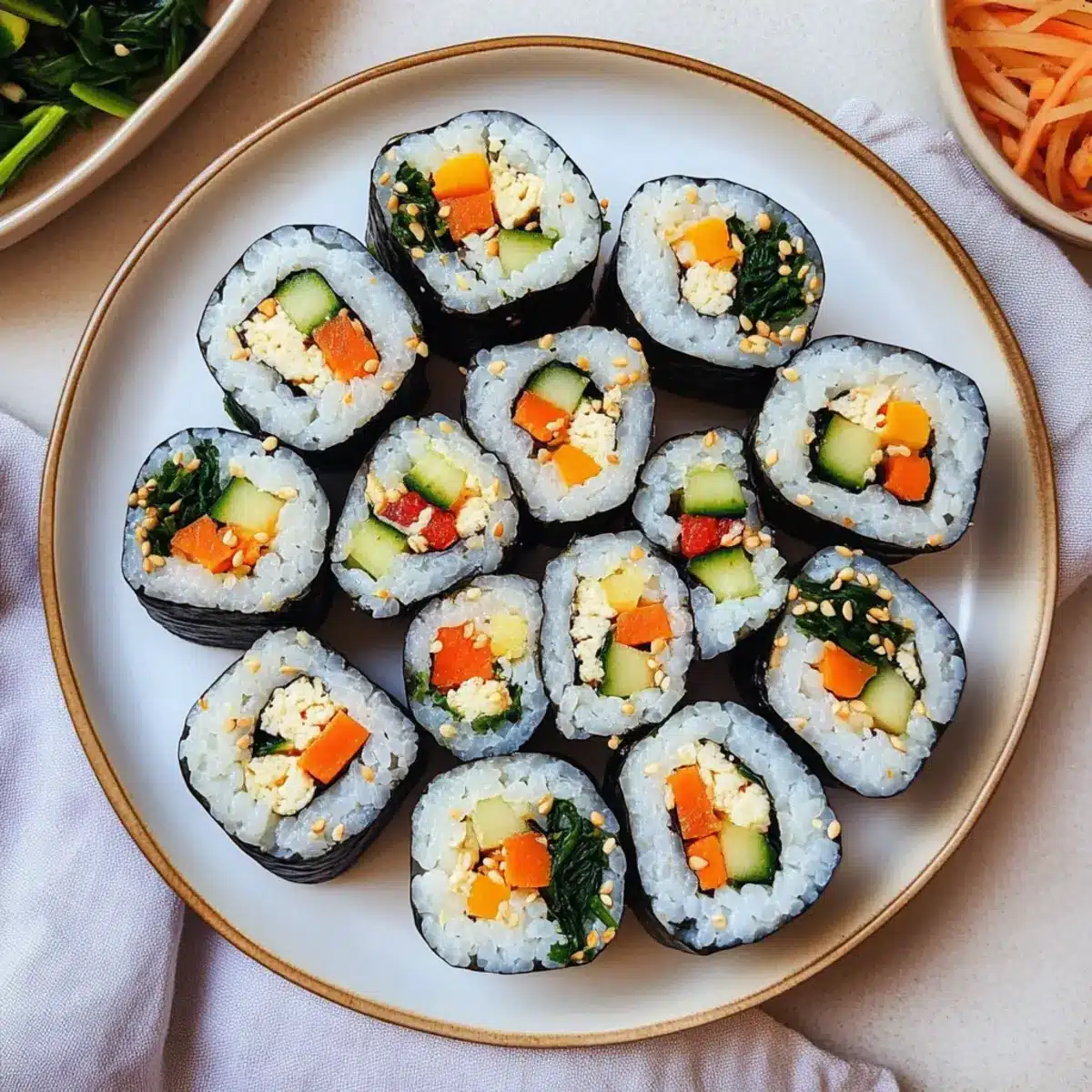
These Vegetable Gimbap are perfect for busy home cooks looking for meal prep solutions! You can prepare the rice and all your fillings—carrots, Swiss chard, cucumbers, and sautéed spinach—up to 24 hours in advance. Store the cooked rice in an airtight container in the refrigerator to maintain its moisture, while the veggies can be cut and stored separately to keep them fresh and crisp. When you’re ready to enjoy your gimbap, simply roll everything together and slice! Remember to rub the rolled gimbap with sesame oil for that delightful shine before serving. This way, you’ll have a nutritious and beautiful meal ready with minimal effort!
Vegetable Gimbap Variations & Substitutions
Feel free to explore these delightful variations and substitutions tailored to your tastes for a unique Vegetable Gimbap experience!
-
Dairy-Free: Replace egg with silken tofu for a creamy, vegan addition that doesn’t compromise on flavor.
-
Spicy Kick: Add a handful of sliced jalapeños or a drizzle of sriracha to the filling for an exciting heat that tingles the taste buds. Change up the spice level based on your comfort and preference!
-
Nutty Flavor Boost: Sprinkle some toasted sesame seeds or add a layer of crushed peanuts inside your gimbap for a lovely crunch and nutty taste.
-
Grilled Goodness: Swap in grilled zucchini or bell peppers for a smoky flavor that adds a satisfying twist to your gimbap filling.
-
Protein-Rich Option: Integrate sliced grilled chicken or tempeh for a heartier gimbap. Combining proteins will keep you energized throughout the day!
-
Herb-Infused: Enhance freshness by adding a few sprigs of chives or cilantro alongside the vegetables for a burst of herbal brightness that elevates every bite.
-
Seasonal Vegetables: Embrace the seasons by using vegetables like roasted sweet potatoes in the fall or asparagus in the spring for an appealing, colorful roll.
-
Alternative Dipping Sauces: Experiment with homemade spicy mayo or a tangy peanut sauce to dip your gimbap in, creating a refreshing twist that’s sure to impress.
Every bite can be a new adventure, just like your culinary skills! For more ideas on creative meal variations, check out our delicious options for quick meal prep recipes and don’t forget to harness your creativity with our guide on vegetarian-friendly dishes. Happy rolling!
Expert Tips for Vegetable Gimbap
-
Roll Tightly: Ensure you roll the gimbap tightly to prevent any fillings from falling out; loose rolls can be a challenge to slice and eat.
-
Prepare Ingredients Ahead: To save time, prep your vegetables and rice in advance, making it quick to assemble your vegetable gimbap on busy days.
-
Cut Smoothly: Use a sharp, wet knife to slice the gimbap; this will help prevent sticking and keep your rolls looking beautifully clean.
-
Experiment with Fillings: Don’t hesitate to customize the fillings based on what veggies you have at home, making this dish truly your own while minimizing waste.
-
Store Properly: If you make gimbap ahead of time, wrap them tightly in plastic wrap and store them in the fridge; consume within 1-2 days for freshness.
How to Store and Freeze Vegetable Gimbap
Fridge: Store tightly wrapped in plastic wrap or an airtight container. It keeps well for up to 1-2 days, maintaining its texture and flavor.
Freezer: For longer storage, slice and freeze separately in a single layer on a baking sheet. Once frozen, transfer to a freezer-safe bag and enjoy within 1-2 months.
Reheating: Thaw overnight in the fridge before enjoying. Gently reheat in a non-stick skillet for a few minutes on low heat, or enjoy cold for a refreshing snack.
Freshness Note: While vegetable gimbap is best eaten fresh, following these tips ensures you can enjoy this delicious dish even when made ahead!
What to Serve with Vegetable Gimbap
Pairing homemade vegetable gimbap with the perfect side dishes elevates your meal, creating a delightful dining experience.
-
Soothing Miso Soup: Light yet flavor-packed, this warm soup makes a comforting complement, enhancing the freshness of gimbap.
-
Crisp Side Salad: A simple mix of greens with a light sesame dressing adds a refreshing crunch that balances the savory rolls.
-
Pickled Vegetables: Tangy and crunchy, they provide a zesty contrast to the creamy textures in your gimbap, awakening the palate.
-
Spicy Kimchi: Its bold flavors and heat perfectly contrast with the mildness of vegetable gimbap, delivering an authentic Korean experience.
-
Garlic Edamame: These tender pods offer a satisfying bite, and their savory garlic notes enhance the umami profile of your meal.
-
Sesame Noodles: Nutty, smooth, and slightly sweet, these noodles can serve as a hearty side that complements your delightful vegetable gimbap.
-
Chilled Green Tea: This refreshing drink cleanses the palate and pairs beautifully, making each bite of gimbap even more enjoyable.
-
Fresh Fruit Skewers: Light and colorful, a selection of seasonal fruits can cleanse the palate and add a sweet finish to your meal.
-
Coconut Sticky Rice: Its subtle sweetness and chewy texture pair wonderfully with the fresh ingredients in gimbap for a unique combo.
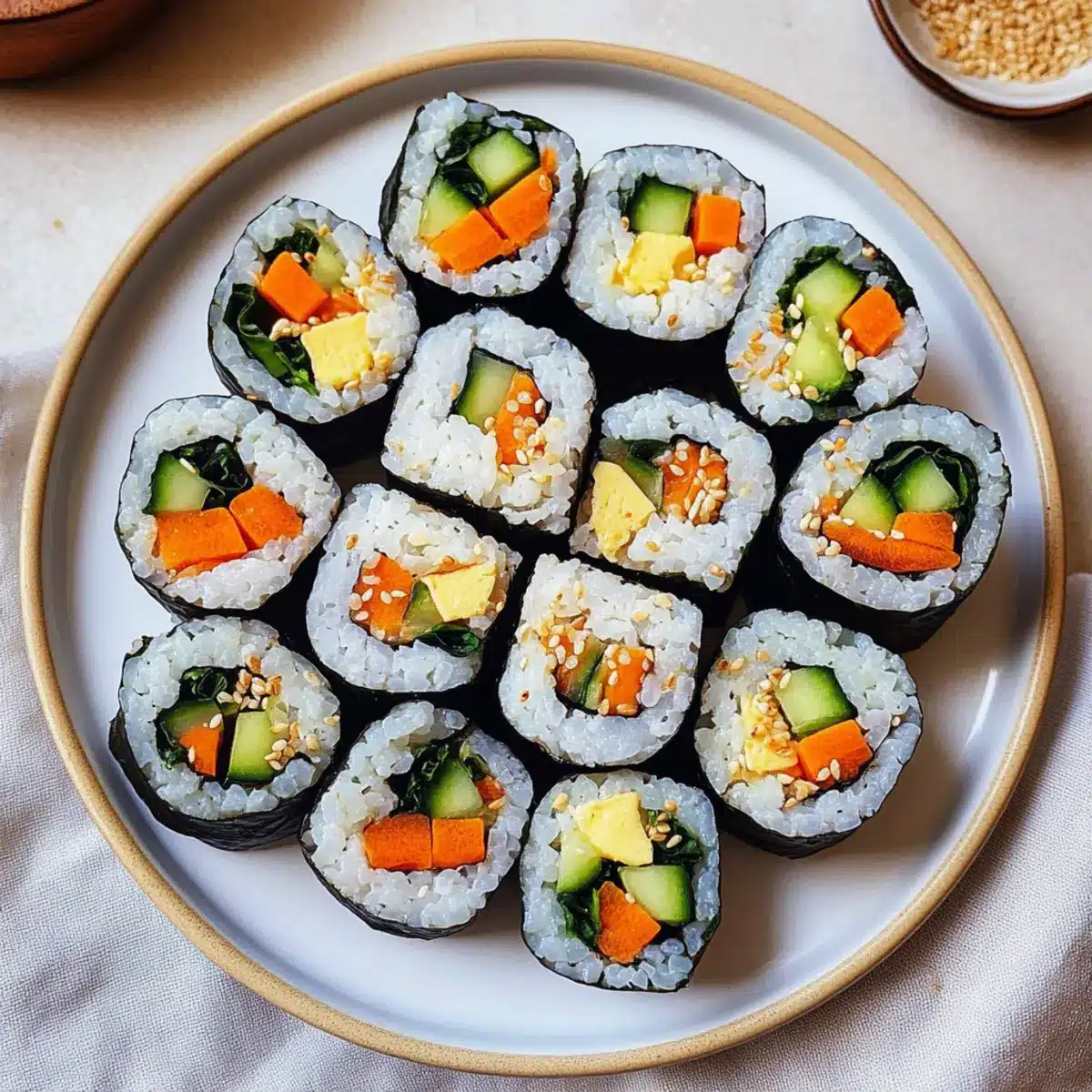
Vegetable Gimbap Recipe FAQs
How do I choose the right vegetables for gimbap?
Absolutely! When selecting vegetables for your gimbap, look for fresh, crisp options like carrots, cucumbers, and Swiss chard. They should be vibrant in color and free from any dark spots or blemishes. For the best crunch, opt for firm vegetables, and feel free to mix seasonal favorites to keep it exciting!
How should I store leftover gimbap?
Very! Gimbap is best enjoyed fresh, but if you have leftovers, wrap them tightly in plastic wrap or place them in an airtight container. They’ll stay fresh in the fridge for up to 1-2 days. Just remember, the sooner you enjoy them, the better the flavor and texture!
Can I freeze vegetable gimbap?
Definitely! To freeze vegetable gimbap, slice the rolls beforehand and lay them in a single layer on a baking sheet. Once frozen, transfer the slices to a freezer-safe bag, ensuring to remove as much air as possible. They can be stored for up to 1-2 months. When ready to eat, thaw them overnight in the fridge, and feel free to enjoy them cold or reheat gently in a non-stick skillet.
What if my gimbap falls apart when slicing?
No worries! If your gimbap isn’t holding together well, it may be due to rolling too loosely. Next time, try to roll it more tightly, pressing gently as you go. Additionally, always use a wet knife for slicing. This technique helps avoid sticking and gives you beautiful, clean pieces.
Is vegetable gimbap safe for people with allergies?
Absolutely! Vegetable gimbap can typically be made allergy-friendly by customizing the ingredients. For individuals with gluten allergies, substitute soy sauce for a gluten-free option. If you have nut allergies, ensure the sesame oil is safe for your consumption. Always check labels for any pre-packaged components to avoid allergens.
Can I customize the fillings according to my diet?
Very much! The beauty of vegetable gimbap is its flexibility. You can easily adjust fillings based on your dietary preferences. Swap in tofu for a vegan option, use different greens like kale instead of spinach, or even add proteins like grilled chicken to make it your own. Enjoy experimenting with your favorites!
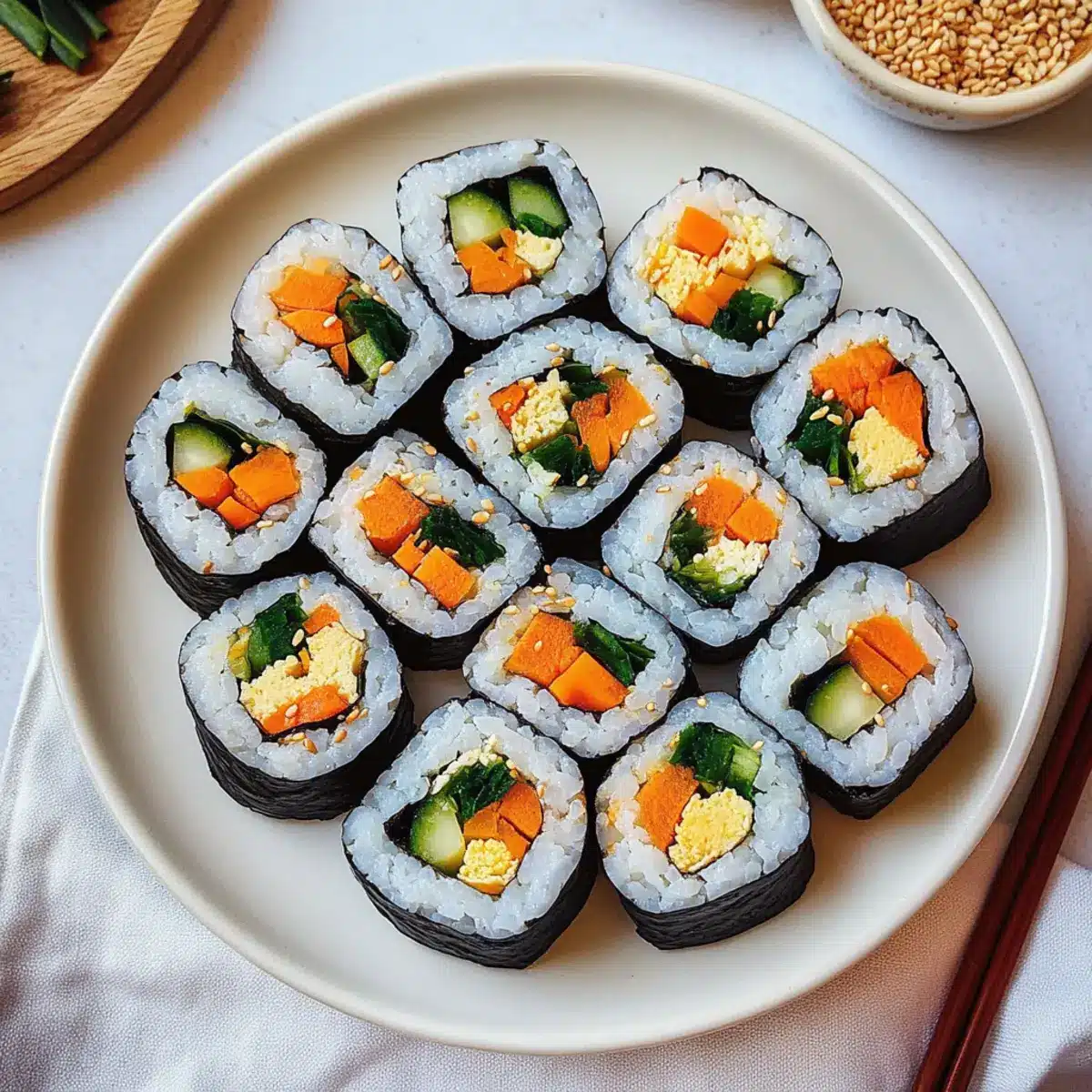
Vegetable Gimbap: Fresh & Easy Korean Rolls You’ll Love
Ingredients
Equipment
Method
- Rinse rice under cold water until water runs clear, then cook in a rice cooker. Stir in sesame oil and salt after cooking.
- Slice carrot, Swiss chard stalks, and cucumber, and fry the eggs to prepare fillings.
- Sauté carrot strips in olive oil over medium heat until soft but still crunchy. Set aside to cool.
- Sauté the spinach until wilted and moisture evaporates. Remove from heat and let cool.
- On a seaweed sheet, spread rice, leaving an edge free, and arrange fillings across the rice.
- Roll the gimbap tightly using the bamboo mat, sealing the end with water if necessary.
- Slice the roll into 8-10 pieces with a sharp, wet knife for clean cuts.
- Serve with sesame seeds sprinkled on top and your favorite dipping sauce.
Leave a Reply