
The crisp snap of napa cabbage and the fragrant warmth of ginger whisk me away to bustling Japanese markets as I prepare to share my favorite quick and easy asazuke (Japanese Pickled Cabbage) recipe. This delightful side dish not only comes together in just a few hours but also brings a burst of umami flavor to any meal, making it the perfect accompaniment to your favorite Asian dishes. With its healthy ingredients and versatility, you can mix and match seasonal veggies like daikon or cucumbers for a unique twist that keeps dinner exciting. Ready to elevate your meals with this vibrant pickled treat? Let’s dive into the world of asazuke!
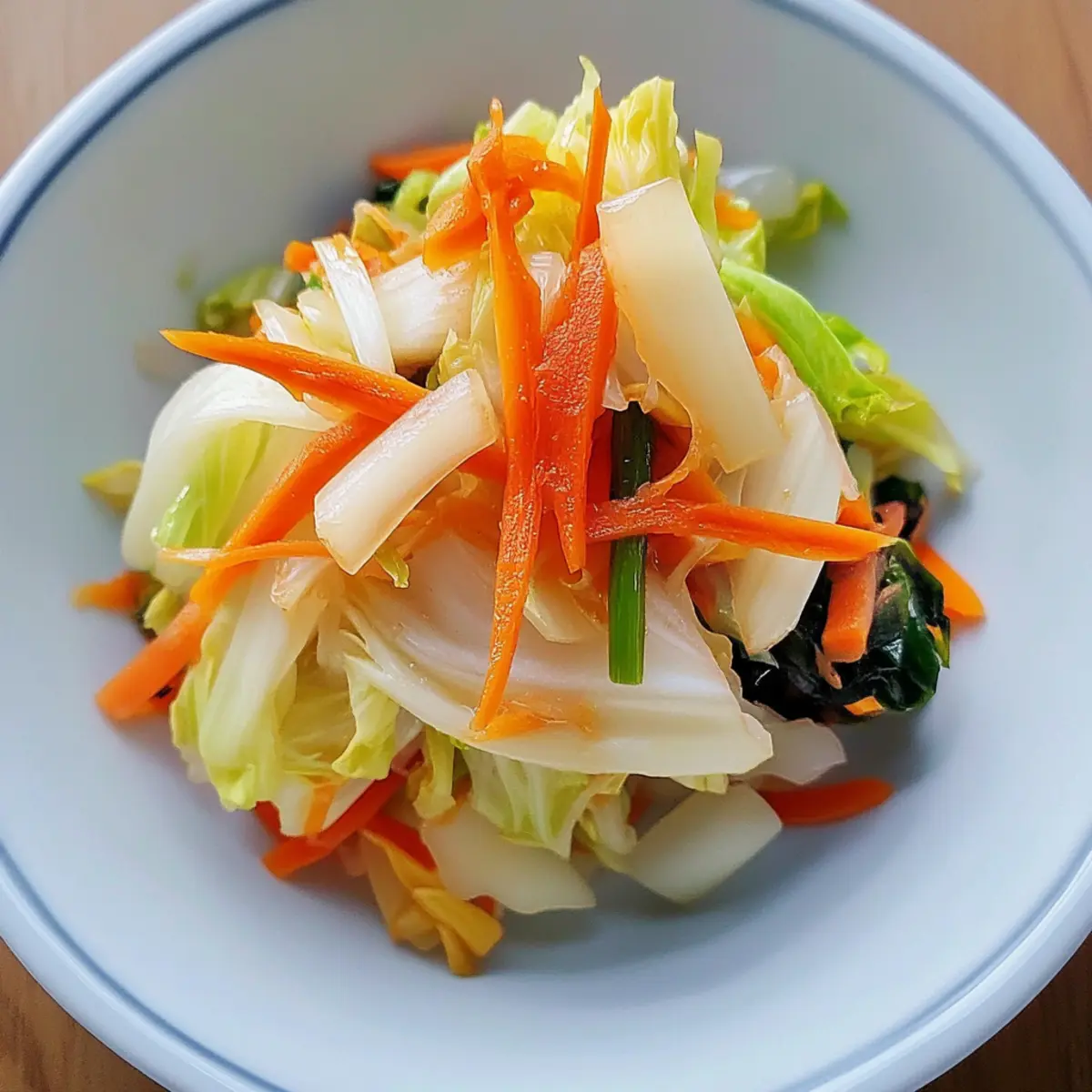
Why is Asazuke a Game Changer?
Quick and Easy: Preparing asazuke takes only minutes, making it a fantastic choice for hectic weeknights or spontaneous cravings for something fresh.
Flavor Explosion: The delightful combination of crunchy vegetables, salty goodness, and a hint of umami from kombu creates a flavor profile that’s irresistible.
Versatile Goodness: Feel free to swap out the napa cabbage for other veggies like Japanese cucumbers or add vibrant herbs—each variation brings a new twist!
Healthy Sidekick: Packed with fresh, wholesome ingredients, asazuke is a nutritious alternative to traditional sides or fast food, helping you maintain a balanced diet.
Cultural Delight: Embrace the beauty of simplicity in Japanese cuisine and impress your friends and family with a traditional dish that’s elevated but easy to make.
When you’re ready to elevate your meals with fresh flavors, try this quick pickling method and discover just how exceptional homemade asazuke can be!
Asazuke Ingredients
• Discover the essentials for crisp Asazuke!
For the Pickles
- Napa Cabbage – This is the main ingredient that provides a satisfying crunch; daikon radish or Japanese cucumbers can be used for variety.
- Carrots – Adds a touch of sweetness and color to the dish; feel free to replace them with any other crunchy vegetable.
- Scallions – Enhances the freshness and overall flavor profile; chives are a perfect substitute if needed.
- Ginger – Infuses spiciness and warmth; opt for fresh ginger for the most vibrant taste.
- Salt – An essential component that draws moisture from the veggies; aim for about 3% of the total vegetable weight for balanced flavor.
- Dried Chili Peppers – Gives your asazuke a kick of heat; adjust the quantity to match your spice preference.
- Kombu – This seaweed adds a rich umami flavor; while other seaweed can be experimented with, kombu is traditionally recommended.
With these fresh ingredients, you are well on your way to creating delightful Asazuke (Japanese Pickled Cabbage) that will elevate any meal with its zesty crunch!
Step‑by‑Step Instructions for Asazuke (Japanese Pickled Cabbage)
Step 1: Prep Vegetables
Begin by thoroughly washing the napa cabbage, then slice it into thin strips, approximately 1-2 inches long. Julienne the carrots to add sweetness and color, chop scallions finely, and mince fresh ginger for that delightful warmth. Everything should be prepped and lined up for mixing, creating a vibrant array of vegetables ready for your asazuke.
Step 2: Combine Ingredients
In a large zip-top bag, combine the napa cabbage, julienned carrots, chopped scallions, minced ginger, salt, dried chili peppers, and kombu. Ensure the ingredients are well mixed to distribute the salt evenly, which is key to the pickling process. Feel the bag’s weight increase as you pack in the veggies, setting the stage for delicious asazuke.
Step 3: Air Removal
Press out as much air as possible from the zip-top bag before sealing it. This step is crucial for proper pickling, as it minimizes oxidation and enhances flavor infusion. Once closed, place the bag flat on a tray for stability, ensuring that all of the vegetables are gently compressed inside, ready to soak in those tasty pickling flavors.
Step 4: Apply Weight
To facilitate the pickling process, place a smaller tray or a heavy plate on top of the sealed bag of vegetables. This weight helps compress the ingredients, encouraging the release of moisture while allowing the salt to work its magic. You’ll know it’s working when you see the veggies beginning to soften and release their juices.
Step 5: Pickling Time
Let the asazuke sit at room temperature for 3 to 5 hours if you’re eager to snack on them quickly. For deeper flavor development, you can also place the bag in the refrigerator overnight. Keep an eye on them—after a few hours, the cabbage will begin changing color, becoming translucent and tender, perfect for serving.
Step 6: Final Prep
Once the asazuke has reached the desired pickling level, carefully drain excess brine from the bag into a bowl. Transfer the pickles to an airtight container for storage. This step locks in the flavors while keeping your asazuke crisp. Enjoy this crunchy, salty delight that complements any meal and showcases the essence of homemade Japanese pickles.
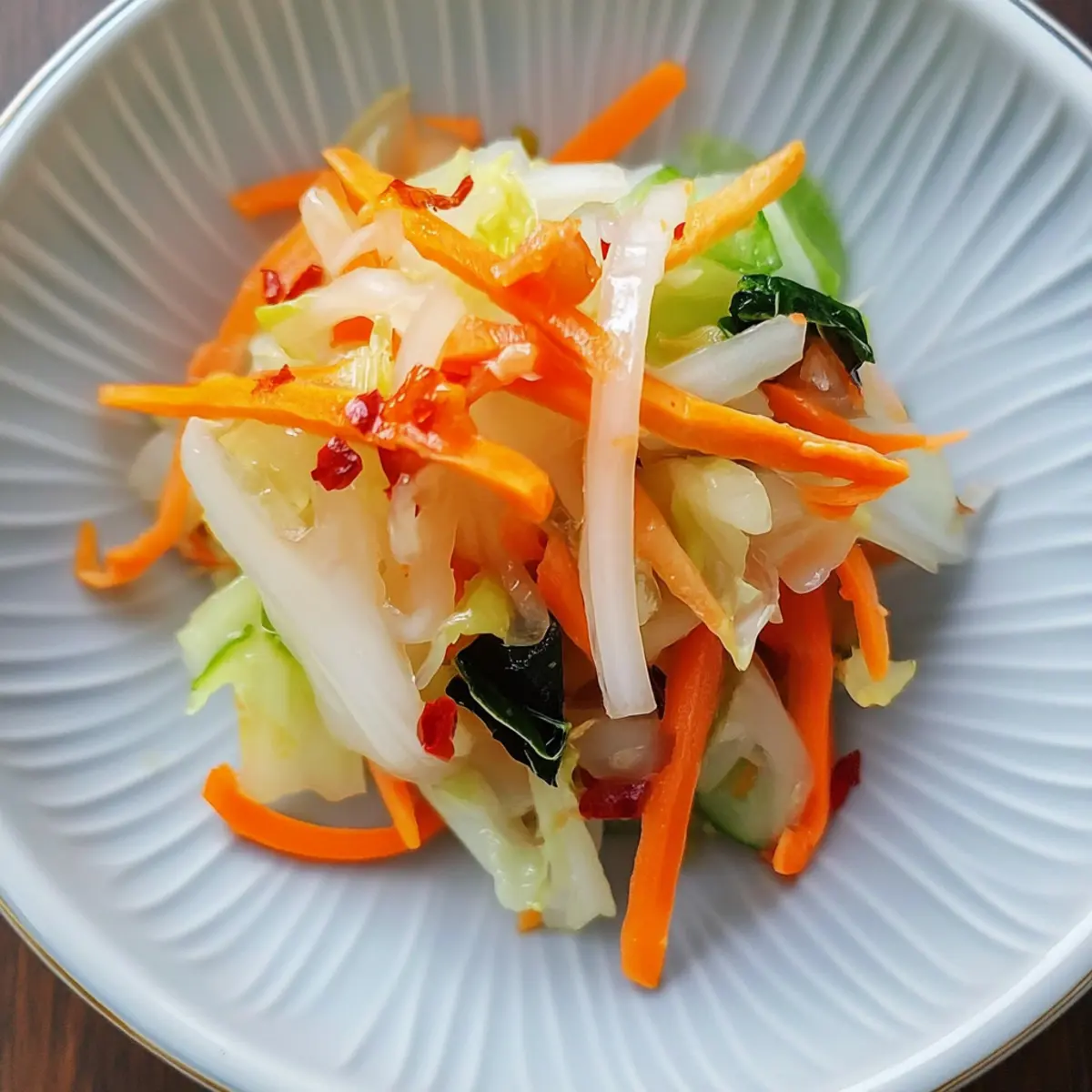
Asazuke Variations & Substitutions
Feel free to play with flavors and textures in your asazuke to create a dish that’s uniquely yours!
-
Crunchy Alternatives: Swap napa cabbage for daikon, Japanese cucumbers, or even celery for added crispness. Each vegetable has its own delightful crunch that changes the experience.
-
Root Veggie Twist: Use radishes or carrots in place of napa cabbage to add sweetness and vibrant color, giving your pickles a sweeter profile.
-
Herb Infusion: Incorporate fresh herbs like shiso or cilantro for a burst of flavor. This herbal twist can elevate the freshness of your asazuke!
-
Spicy Kick: Experiment with different dried chili peppers or chili flakes to adjust the heat level. Consider adding a splash of hot sauce for an additional flavor dimension.
-
Seaweed Swap: While kombu is recommended for umami, try using nori or wakame for a different flavor profile. Each type of seaweed brings its own uniqueness to your dish.
-
Vinegar Addition: Add a splash of rice vinegar for a tangier note that brightens up the pickles. This can balance out the sweetness of vegetables like carrots.
-
Citrus Zing: Introduce citrus peel or juice to add brightness. Lemon or yuzu will provide a refreshing contrast to the savory elements.
-
Fermented Flair: For a tangy twist, leave your asazuke to ferment for a couple more days. This creates a probiotic-rich version that adds depth and complexity to the flavor.
These variations not only enhance your pickles but also allow you to tailor your asazuke experience to any meal. Whether you’re serving it with sushi or enjoying it as a snack, finding the right combination is the key to a memorable dish!
How to Store and Freeze Asazuke
Fridge: Store the asazuke in an airtight container in the refrigerator for up to 3 days. This ensures the crisp texture and vibrant flavors are preserved.
Freezer: While it’s best enjoyed fresh, asazuke can be frozen for up to a month. Seal in an airtight container, noting that the texture may change slightly upon thawing.
Reheating: Simply take out the desired amount and let it thaw in the fridge overnight or at room temperature for a few hours. Enjoy your delicious asazuke as a refreshing side!
Make Ahead Options
These asazuke (Japanese Pickled Cabbage) are ideal for meal prep, allowing you to save valuable time during busy weeknights! You can chop and combine all your veggies up to 24 hours in advance, just be sure to follow the air removal and weight application steps for optimal pickling. For the best flavor, let them pickled for about 3-5 hours at room temperature, or refrigerate overnight for a more intense taste. Once they’ve reached your preferred level of tanginess, simply drain the excess brine, transfer to an airtight container, and they’ll stay fresh for up to 3 days. Enjoy restaurant-quality pickles, made easier at home, with these simple make-ahead options!
What to Serve with Quick and Easy Asazuke: Japanese Lightly Pickled Cabbage
Elevate your dining experience with the perfect accompaniments that complete your Japanese meal and delight the palate.
-
Steamed Rice: A soft, fluffy bowl of rice acts as the ideal canvas for the bold flavors of asazuke, providing balance and fullness.
-
Grilled Salmon Teriyaki: The sweet and savory glaze of salmon contrasts beautifully with the crispness of asazuke, creating a delightful harmony of flavors.
-
Miso Soup: A warm, umami-rich bowl of miso soup adds comforting warmth, enhancing the overall taste experience with a gentle savory note.
-
Tempura Vegetables: The light, crispy texture of tempura pairs wonderfully with the crunchy pickles, adding depth and satisfying contrasts to your meal.
-
Sushi Rolls: Fresh sushi rolls embody bright, clean flavors that complement the salty punch of asazuke, making each bite a journey through taste.
-
Cold Soba Noodles: These chilled noodle dishes provide a refreshing touch that balances the pickles’ crunch, perfect for a light, summery dinner.
-
Japanese Green Tea: Sip on a warm cup of green tea to cleanse your palate and enrich your meal with a wholesome, earthy finish.
-
Matcha Cheesecake: For dessert, a slice of creamy matcha cheesecake introduces a sweet and slightly bitter twist, a lovely way to celebrate your modern Japanese feast.
Expert Tips for Asazuke
• Even Salting: Ensure your vegetables are evenly salted to kickstart the pickling process. This prevents uneven flavor and texture in your asazuke.
• Avoid Over-Pickling: Monitor the pickles closely after a few hours. Consuming them within 2-3 days guarantees the best freshness and crunch.
• Vegetable Variations: Don’t hesitate to experiment with different vegetables! Options like daikon or Japanese cucumbers create unique textures and flavors in your asazuke.
• Use Fresh Ingredients: Always opt for fresh, vibrant ingredients, especially the ginger, to maximize the flavor and nutritional benefits in your pickles.
• Check for Crispiness: For a satisfying crunch, adjust the pickling time. If you prefer a firmer texture, reduce the soaking time slightly.
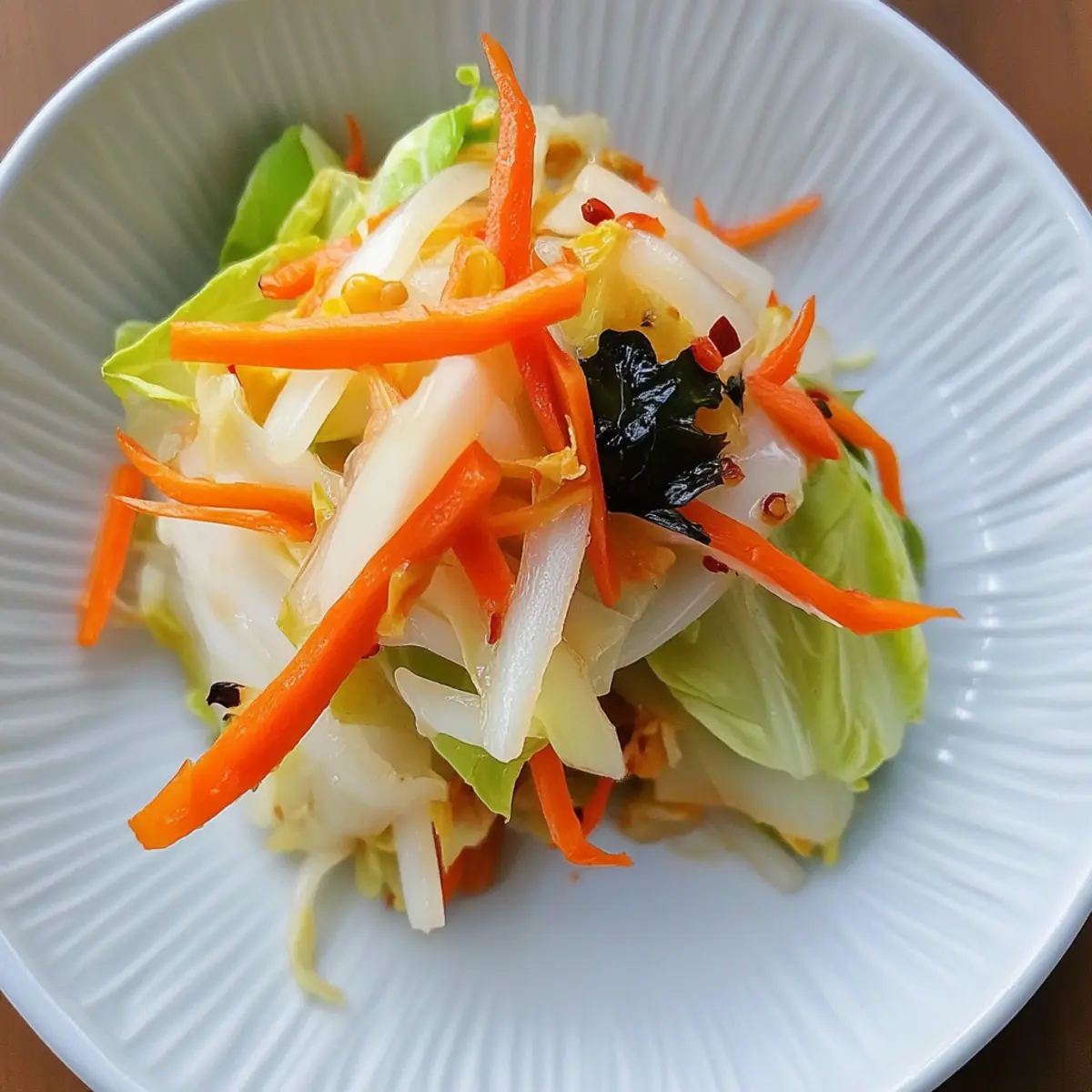
Quick and Easy Asazuke: Japanese Lightly Pickled Cabbage Recipe FAQs
What vegetables can I use for asazuke?
Absolutely! While napa cabbage is the traditional choice, you can substitute it with daikon radish, Japanese cucumbers, or even crunchy carrots. Feel free to mix and match your favorite seasonal vegetables for a delightful twist!
How should I store asazuke after making it?
For optimal freshness and crunch, store your asazuke in an airtight container in the refrigerator. It will stay crispy for about 2-3 days. Just remember to keep an eye on it, as the flavor is best enjoyed when fresh!
Can I freeze asazuke?
Yes, you can freeze asazuke! Transfer it to an airtight container, ensuring it’s sealed well. It can last for up to a month in the freezer, though the texture may soften slightly upon thawing. Just thaw it overnight in the fridge or at room temperature, and you’ll still enjoy a refreshing side!
What should I do if my asazuke turns out too salty?
If your asazuke ends up saltier than desired, don’t worry! You can always rinse the pickles under cold water to reduce the saltiness. Alternatively, adding fresh vegetables to the mix can help balance out the flavors without losing the delicious pickling essence.
Is asazuke safe for pets or certain allergies?
Generally, asazuke is safe for pets as it’s made from vegetables; however, be cautious with ingredients like salt and ginger. For those with allergies, ensure you substitute onion-heavy components, such as scallions or chives, if necessary. Always check with your doctor if you have specific dietary concerns.
Can I adjust the spice level in my asazuke?
Very much so! If you prefer a milder flavor, reduce the amount of dried chili peppers you use. Alternatively, if you love heat, feel free to add more spicy elements. Adjusting the chili count is a great way to tailor the recipe to your taste, so have fun with it!
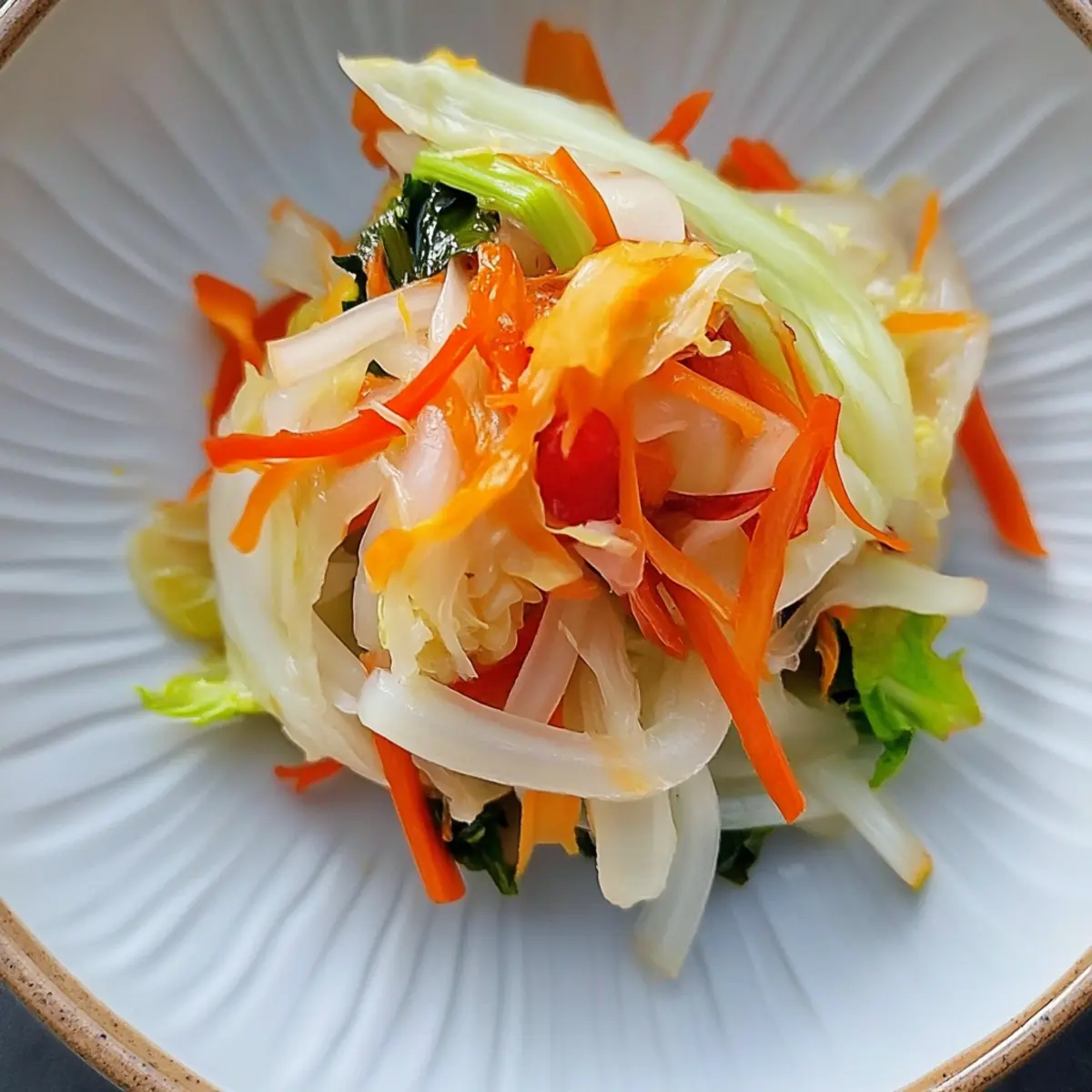
Discover Asazuke: Crunchy Japanese Pickled Cabbage Delight
Ingredients
Equipment
Method
- Wash the napa cabbage thoroughly and slice it into thin strips, about 1-2 inches long.
- Julienne the carrots, chop scallions finely, and mince the fresh ginger.
- In a large zip-top bag, combine the napa cabbage, carrots, scallions, ginger, salt, chili peppers, and kombu.
- Press out as much air as possible from the bag before sealing it.
- Place a smaller tray or heavy plate on top of the sealed bag to apply weight.
- Let the asazuke sit at room temperature for 3 to 5 hours, or refrigerate overnight.
- Drain excess brine from the bag and transfer the pickles to an airtight container.
Leave a Reply