
While frantically rummaging through my pantry the other evening, I stumbled upon a treasure: a packet of instant ramen noodles just waiting to be transformed into something extraordinary. This sparked my latest culinary adventure—a delightful Mongolian Beef Ramen Stir-Fry! In just 30 minutes, you can whip up this quick and easy weeknight meal that’s not only a feast for the taste buds but also a feast for the eyes. Picture tender strips of sirloin steak and vibrant veggies coming together in a savory sauce, all wrapped around chewy noodles. It’s a warm embrace of flavors, perfect for those busy evenings when you crave something delicious without the fuss. Plus, it’s endlessly adaptable—make it vegetarian with tofu or load it up with any seasonal vegetables you have on hand. What combination will you create for your family tonight?
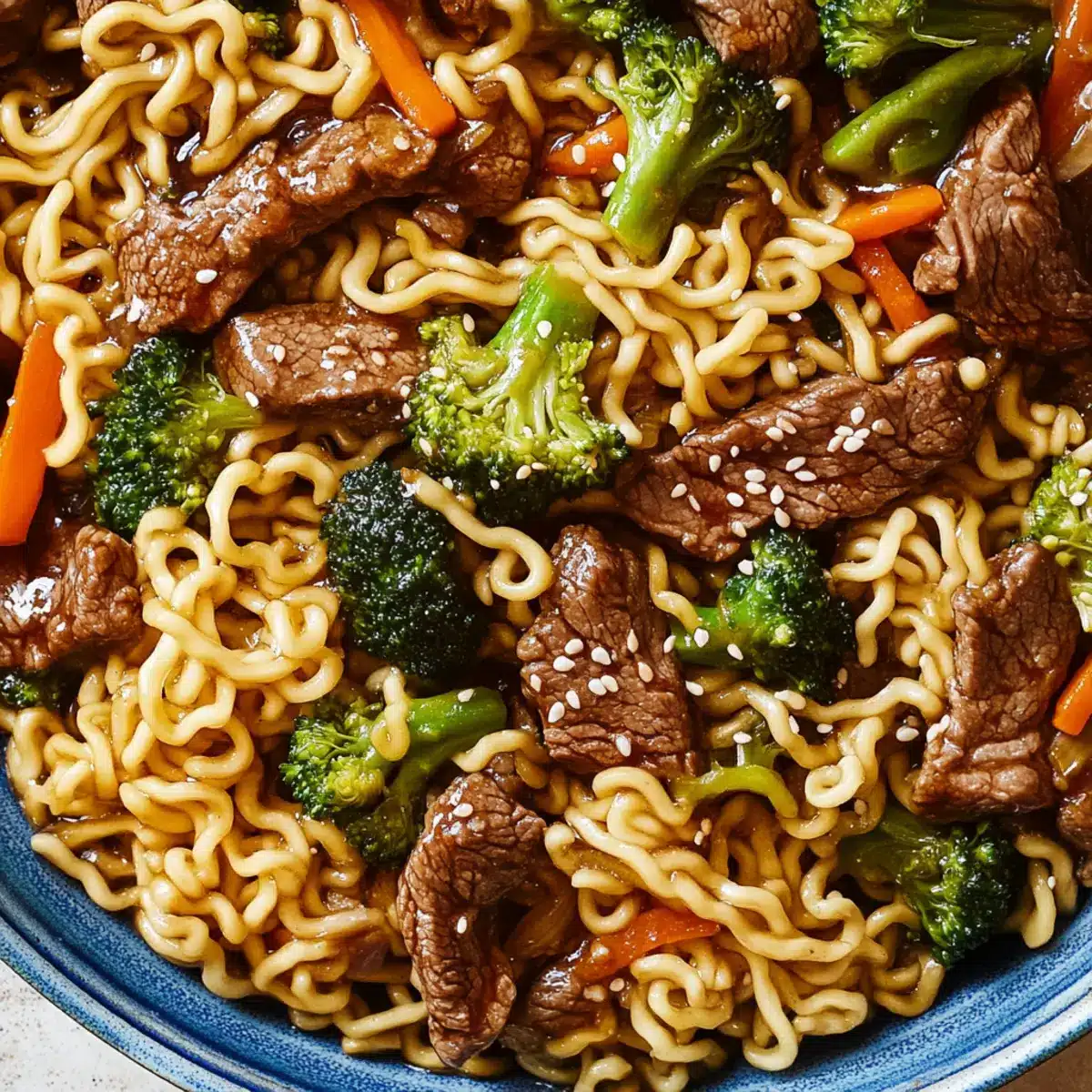
Why is Mongolian Beef Ramen so Great?
Quick and Easy: This dish comes together in just 30 minutes, making it a feasible option for even the busiest weeknights.
Flavor Packed: Soy sauce and ginger blend together to create a mouthwatering sauce that infuses the beef and veggies with rich taste.
Customizable: Whether you prefer chicken, tofu or extra veggies, this recipe can be adapted to suit your preferences or pantry odds and ends.
Crowd Pleaser: Serving this dish guarantees smiles around the dinner table; its colorful presentation is as inviting as the flavor.
Satisfying Textures: The combination of chewy noodles, tender beef, and crisp veggies makes every bite interesting and enjoyable.
Make sure to check out our tips on serving suggestions to elevate your meal experience further!
Mongolian Beef Ramen Ingredients
For the Ramen Base
• Instant Ramen Noodles – Quick-cooking base for this delicious Mongolian Beef Ramen; discard the flavor packet.
• Vegetable Oil – Essential for frying the beef to achieve a nice sear.
For the Beef and Sauce
• Sirloin Steak – Provides tender, flavorful protein; slice against the grain for best texture.
• Cornstarch – Coats the beef for a crispy exterior and helps thicken the savory sauce.
• Toasted Sesame Oil – Adds a rich, nutty depth that enhances the overall flavor.
• Garlic – Freshly minced for optimal aromatic flavor; don’t skip this!
• Ginger – Adds a warm, spicy note that complements the beef beautifully.
• Reduced-Sodium Soy Sauce – Key ingredient for seasoning; choose reduced-sodium to control saltiness.
• Brown Sugar – Balances the savory soy sauce with a hint of sweetness for depth.
• Low-Sodium Chicken or Beef Broth – Enriches the sauce; opt for low-sodium to keep it healthier.
• Red Pepper Flakes – Optional, for those who enjoy a little heat in their dish!
For the Vegetables
• Broccoli Florets – Adds crunch and nutrition; feel free to substitute with your favorite veggies.
• Carrot Matchsticks – Offers sweetness and vibrant color, or swap for bell peppers if you prefer.
• Scallions – Fresh garnish to finish; can be replaced with chives if desired.
For Garnishing
• Toasted Sesame Seeds – Adds a crunchy texture and a lovely visual touch to the dish.
This Mongolian Beef Ramen is not only a feast for the eyes but also packs a punch of flavor!
Step‑by‑Step Instructions for Mongolian Beef Ramen Stir-Fry
Step 1: Cook Ramen Noodles
Begin by boiling water in a medium pot over high heat. Once it reaches a rolling boil, add the instant ramen noodles, cooking according to package instructions—usually about 3 minutes. Stir occasionally to prevent sticking. Once tender, drain the noodles and set them aside, keeping them warm as you move on to the next steps.
Step 2: Heat the Skillet
In a large skillet or wok, heat 2 tablespoons of vegetable oil over medium-high heat. Allow the oil to shimmer—this indicates it’s hot enough. Make sure you have your ingredients prepped because you’ll be cooking the beef quickly! The aromatic sizzle of the oil prepares you for the delicious Mongolian Beef Ramen meal ahead.
Step 3: Prepare the Beef
While the skillet heats, coat thinly sliced sirloin steak with a couple of tablespoons of cornstarch in a bowl, ensuring even coverage for a crispy texture. Once the oil is hot, carefully add the beef in a single layer and let it sear without moving for about 2–3 minutes. Flip once browned, allowing it to cook through for another minute until the beef is crispy and golden.
Step 4: Add Aromatics and Sauce
Stir in minced garlic and ginger, cooking for 30 seconds until fragrant. Next, pour in the reduced-sodium soy sauce, brown sugar, and low-sodium broth. Stir well, bringing the mixture to a gentle simmer, and cook for about 2-3 minutes until the sauce thickens slightly, enveloping the beef in a glossy glaze.
Step 5: Fold in the Veggies
Now it’s time to add the vibrant broccoli florets and carrot matchsticks to the skillet. Stir them in gently, cooking for another 3–4 minutes until the vegetables are tender but still crisp, showcasing their bright colors. This step not only enhances the dish visually but also adds that perfect crunch to your Mongolian Beef Ramen.
Step 6: Combine with Ramen
Once the veggies are cooked, fold the reserved ramen noodles into the skillet, ensuring they are well coated with the savory sauce and combined with the beef and vegetables. Cook for an additional 1-2 minutes until the noodles are heated through and fully incorporated into the delightful mixture.
Step 7: Garnish and Serve
Turn off the heat and transfer your delicious Mongolian Beef Ramen Stir-Fry to serving plates. Garnish generously with chopped scallions and a sprinkle of toasted sesame seeds for added crunch and flavor. Serve hot for a satisfying weeknight dinner that’s sure to impress loved ones around the table!
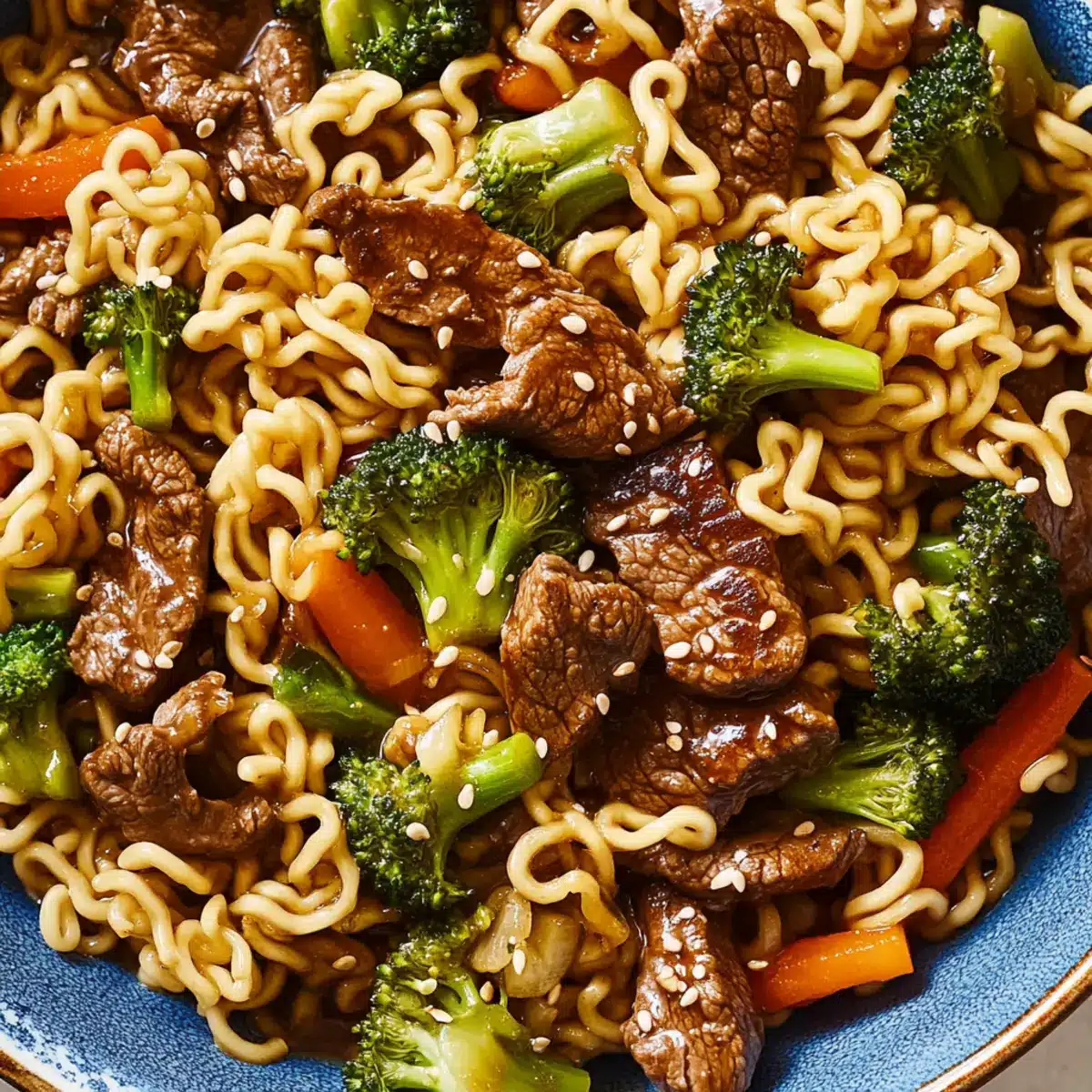
What to Serve with Easy Mongolian Beef Ramen Stir-Fry
Elevate your meal experience by pairing this quick dish with delightful sides that complement its rich flavors and textures.
-
Crispy Spring Rolls: These crunchy bites filled with fresh vegetables are the perfect starter that adds an extra crunch to your meal.
-
Steamed Edamame: Lightly salted edamame brings a pop of freshness, balancing the savory richness of the ramen stir-fry beautifully.
-
Garlic Bok Choy: This quick sauté of bok choy with garlic offers a grassy note and tenderness that beautifully pairs with the chewy noodles.
-
Asian Cucumber Salad: A refreshing salad with cucumbers, sesame oil, and vinegar adds a cool contrast and vibrant crunch to your dinner table.
-
Pickled Vegetables: These tangy delights cut through the richness of the beef, offering a delightful burst of acidity that brings balance to the dish.
-
Sesame Noodles: For those who love extra noodles, these cold sesame noodles make for a fantastic side, echoing the flavors from your Mongolian Beef Ramen.
-
Chilled Green Tea: A calming drink choice that refreshes your palate, the subtle flavors of green tea pair nicely with the savory aspects of the stir-fry.
With these delightful options, you can create a full and satisfying meal that your family will love!
Storage Tips for Mongolian Beef Ramen
Fridge: Store leftovers in an airtight container in the fridge for up to 2 days. The noodles may absorb the sauce; adding a splash of broth when reheating will help revive it.
Freezer: If you need to freeze, place cooled stir-fry in a freezer-safe container for up to 1 month. To reheat, thaw overnight in the fridge and warm on the stovetop with a bit of broth.
Reheating: For best results, reheat on the stovetop over medium heat, adding a little water or broth to help loosen the sauce and achieve the perfect consistency.
Room Temperature: Avoid leaving Mongolian Beef Ramen out for more than 2 hours to prevent food safety issues; always refrigerate leftovers promptly.
Mongolian Beef Ramen Variations
Customize your Mongolian Beef Ramen with these fun and flavorful twists that invite you to explore and create!
-
Chicken Delight: Swap sirloin steak for thinly sliced chicken breast for a lighter protein option. This brings a subtle, juicy flavor that pairs well with the savory sauce.
-
Tofu Transformation: Substitute beef with cubed tofu for a delightful vegetarian option. When sautéed until golden, tofu absorbs the sauce beautifully, adding a creamy texture to each bite.
-
Veggie Boost: Add a medley of vegetables like bell peppers, snap peas, or bok choy for an extra crunch and burst of color. Feel free to get creative with whatever you have on hand!
-
Heat It Up: Amp up the spice level by adding sliced jalapeños or extra red pepper flakes to the sauce. This gives a delightful kick that will warm you up from the inside out.
-
Noodle Variety: Rather than ramen, try udon or soba noodles in this recipe. Each offers a unique texture and taste, making it fun to switch things up!
-
Peanut Butter Twirl: Add a spoonful of creamy peanut butter to the sauce for a rich, nutty flavor twist. It blends seamlessly, creating a luscious sauce that hugs every ingredient.
-
Teriyaki Zest: For a sweeter flavor profile, replace soy sauce with teriyaki sauce. This adds a delightful sweetness and depth, creating an entirely new taste experience.
-
Mushroom Medley: Toss in shiitake or button mushrooms for a hearty addition. Their earthy flavor enhances the overall richness of the dish, giving you a delightfully satisfying meal.
Explore these variations to make your Mongolian Beef Ramen uniquely yours! Don’t forget to check out our tips on serving suggestions for even more inspiration!
Expert Tips for Mongolian Beef Ramen
-
Slice Thinly: Make sure to slice the sirloin steak thinly against the grain for optimal tenderness, avoiding chewiness during cooking.
-
Non-Stick Essential: Use a non-stick skillet to prevent the beef from sticking, ensuring a beautiful sear without fuss.
-
Perfect Timing: Add your vegetables at the right stage of cooking to maintain their crispness; overcooking can lead to soggy veggies in your Mongolian Beef Ramen.
-
Adjust Thickness: If you desire a thicker sauce, simply mix in additional cornstarch; remember to dissolve it in water before adding it to the skillet for even distribution.
-
Freshness Counts: Using fresh garlic and ginger boosts the flavor profile immensely; don’t substitute with powdered versions for the best taste!
Make Ahead Options
These Mongolian Beef Ramen Stir-Fry components are perfect for meal prep enthusiasts! You can marinate the sirloin steak in soy sauce and ginger up to 24 hours beforehand to enhance flavor and tenderness. Additionally, pre-chop your vegetables (broccoli, carrots, etc.) and store them in an airtight container in the fridge for up to 3 days. To maintain quality, keep the ramen noodles separate until you’re ready to serve. When you’re set to enjoy your meal, cook your marinated beef and aromatics as instructed, fold in the prepped vegetables, and mix with the noodles. You’ll have a delicious, home-cooked dinner with less fuss, all while saving you valuable time on busy weeknights!
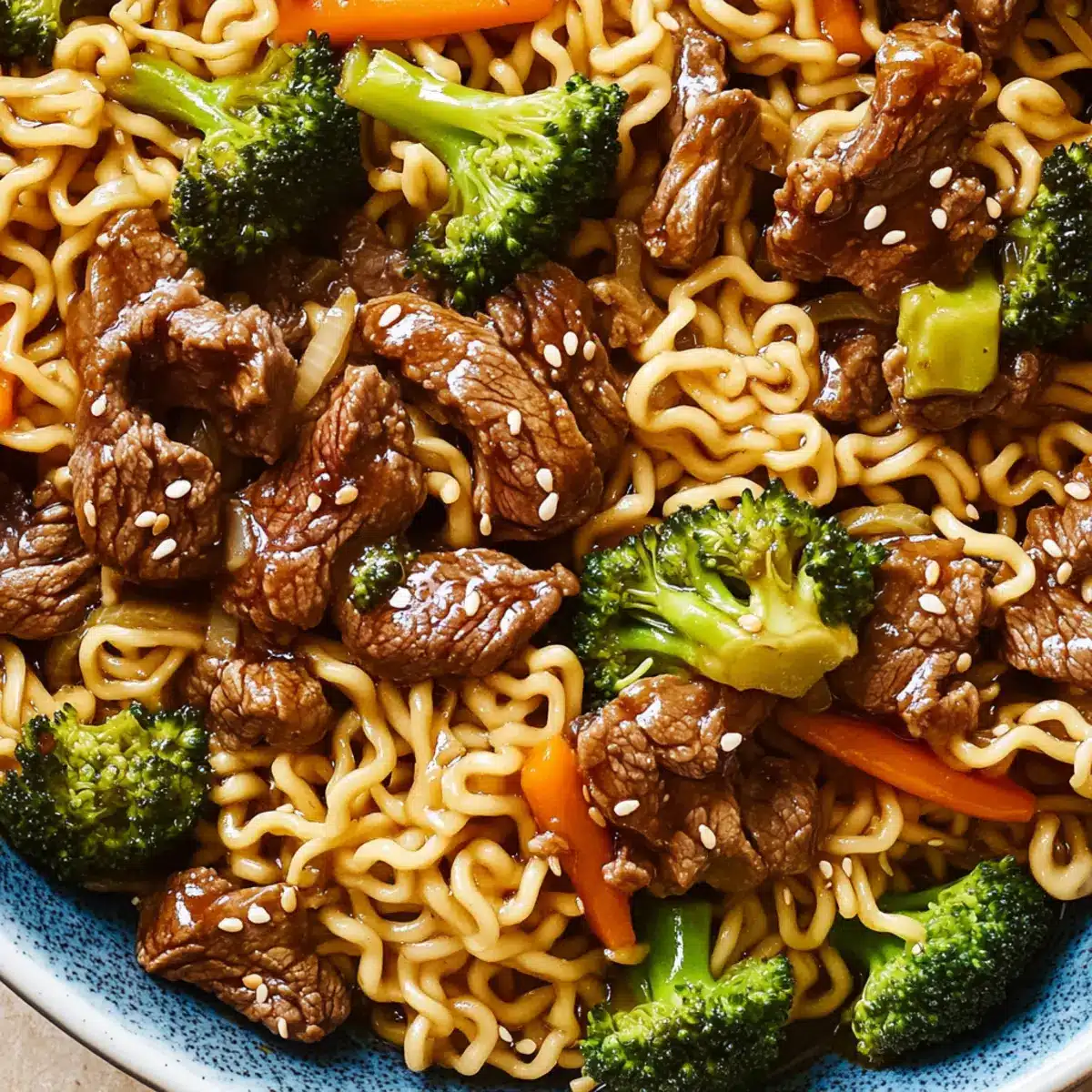
Mongolian Beef Ramen Stir-Fry Recipe FAQs
How do I choose the best ingredients for my Mongolian Beef Ramen?
Absolutely! For the best flavor and texture in your Mongolian Beef Ramen, look for sirloin steak that’s bright red with minimal fat—this cut is both tender and flavorful. Also, select fresh vegetables that are vibrant and firm; no dark spots or wilting. For garlic and ginger, pick ones that feel heavy for their size and have a strong aroma.
What are the best storage methods for leftovers?
Very! To store leftovers from your Mongolian Beef Ramen, transfer them to an airtight container and keep in the fridge for up to 2 days. The noodles may absorb sauce over time, so be sure to add a splash of broth or water when reheating to restore the delicious texture and sauciness.
Can I freeze Mongolian Beef Ramen?
Absolutely! To freeze your stir-fry, let it cool completely and then place it in a freezer-safe container. It will stay good for up to 1 month. When you’re ready to enjoy, thaw it overnight in the fridge. Reheat on the stovetop over medium heat, adding a bit of broth to help loosen up the sauce and restore that perfect consistency.
What should I do if my sauce is too thin?
No worries! If your sauce isn’t thick enough, mix an additional 1 tablespoon of cornstarch with an equal amount of water in a small bowl to create a slurry. Stir this into your sauce while it’s simmering and continue to cook for another 1-2 minutes until it thickens to your desired consistency.
Is this dish safe for my pets?
Very! While Mongolian Beef Ramen features ingredients that are safe for humans, it’s essential to remember that the soy sauce and seasoning can be too salty for pets. If you want to share a bit with your furry friend, be sure to keep it simple and remove any seasoning, focusing on plain veggies and beef. Always consult your vet if unsure!
Are there any allergy considerations for this recipe?
Of course! This dish contains soy sauce, which has gluten, so it may not be suitable for those with gluten allergies unless a gluten-free soy sauce is used. Additionally, those with allergies to sesame should skip the toasted sesame oil and sesame seeds. Always double-check the labels of your ingredients to ensure they meet your dietary needs.
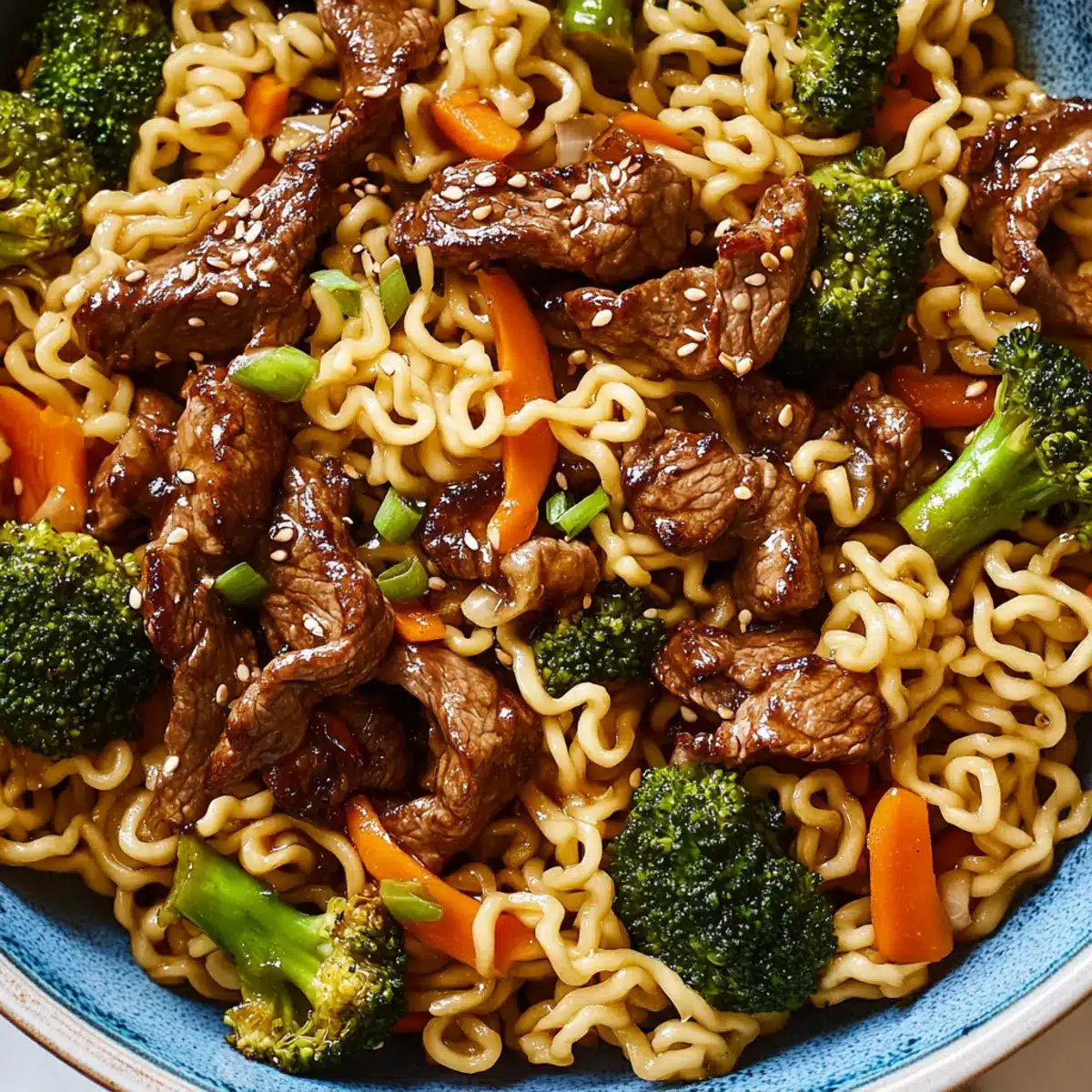
Savor Mongolian Beef Ramen for an Easy Weeknight Dinner
Ingredients
Equipment
Method
- Begin by boiling water in a medium pot over high heat. Once boiling, add the instant ramen noodles and cook according to package instructions, usually about 3 minutes. Stir occasionally, drain, and set aside.
- In a large skillet or wok, heat 2 tablespoons of vegetable oil over medium-high heat until shimmering.
- Coat thinly sliced sirloin steak with cornstarch. Once the oil is hot, add the beef in a single layer, sear for 2–3 minutes without moving, then flip and cook for another minute until golden.
- Add minced garlic and ginger, cooking for 30 seconds until fragrant. Pour in soy sauce, brown sugar, and broth. Stir, bring to simmer for 2-3 minutes until sauce thickens.
- Add broccoli florets and carrot matchsticks. Stir gently, cooking for 3–4 minutes until vegetables are tender but still crisp.
- Fold the reserved ramen noodles into the skillet, ensuring they're well coated with sauce. Cook for an additional 1-2 minutes until heated through.
- Transfer to serving plates, garnish with chopped scallions and sesame seeds, and serve hot.
Leave a Reply