
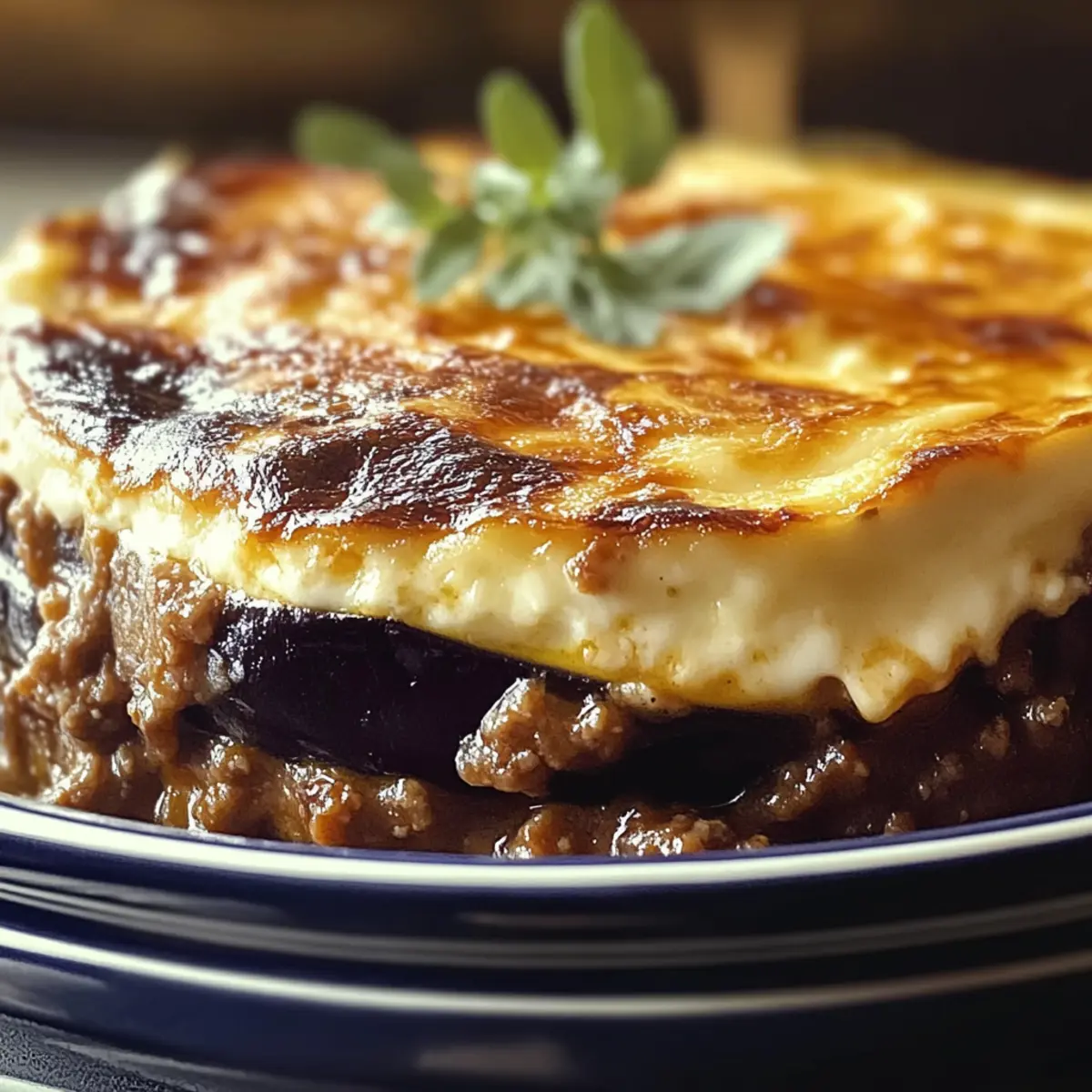
As I walked through a sun-drenched marketplace in Athens, the intoxicating scents of roasted eggplant and spiced lamb beckoned to me, igniting a memory of family dinners filled with laughter and warmth. This is the essence of Greek Moussaka, a dish that wraps you in layers of comfort like a favorite blanket. With a delightful combination of baked eggplant, savory ground meat, and a silky béchamel sauce, this recipe is not only a crowd-pleaser but also incredibly make-ahead friendly. Perfect for busy weeknights or special gatherings, you can prepare it in advance and even stash away portions in your freezer for those nights when cooking feels like too much. So, are you ready to bring a taste of Greece into your kitchen? Let’s dive into the layers of this unforgettable dish!

Why Choose Greek Moussaka Tonight?
Comforting layers of baked eggplant and savory meat create a dish that feels like a warm hug on a plate. Make-ahead magic allows you to prepare this delight in advance, perfect for busy weeknights. Crowd-pleasing appeal ensures your family and friends will be coming back for seconds. Versatility shines through with ingredient swaps, whether you prefer beef, lamb, or a vegetarian twist. Don’t forget to pair it with a refreshing Greek salad or homemade tzatziki sauce for an extra layer of flavor. Embrace this traditional comfort food that promises to nourish both body and soul!
Greek Moussaka Ingredients
• Discover the essential components for this layered delight!
For the Vegetables
- Eggplants – Essential for layering; soak and fry to enhance flavor. Use firm, glossy ones.
- Potatoes – Add heartiness and structural stability to the layers.
- Zucchini – Provides moisture and texture; do not skip this for optimal flavor.
For the Meat Sauce
- Ground Meat (Beef or Lamb) – Fresh and lean for depth; lamb is traditional, but beef is acceptable.
- Onion – Sweet red onion balances flavors and adds sweetness.
- Garlic – Fresh garlic contributes an aromatic quality to the sauce.
- Crushed Tomatoes – Canned varieties deepen flavor when simmered for the meat sauce.
- Red Wine – Enhances richness and acidity in the meat sauce; can substitute with broth if desired.
- Spices (Cinnamon & Nutmeg) – Key spices for authentic Greek flavor; do not omit.
- Fresh Herbs (Oregano, Thyme, Parsley) – Add fresh Mediterranean notes that elevate the dish.
For the Béchamel Sauce
- Butter – Adds richness; the foundation of the béchamel.
- Flour – Thickens the béchamel for the right texture.
- Milk – Provides creaminess; use whole milk for best results.
- Egg Yolks – Enriches the sauce for a silky finish.
- Nutmeg – A hint adds warmth; essential for traditional flavor.
- Additional Cheese – Stir in for added flavor and creaminess, enhancing your Greek Moussaka.
For the Topping
- Cheese (Kefalograviera or Parmesan) – For a golden crust; fresh cheese is preferred for rich flavor.
Step‑by‑Step Instructions for Greek Moussaka
Step 1: Prepare Vegetables
Slice the eggplants, zucchini, and potatoes into even rounds. For the eggplants, sprinkle salt on the slices and let them sit for 30 minutes to draw out moisture, which enhances flavor and reduces bitterness. While waiting, you can start preparing your work area and gather your ingredients for the next steps.
Step 2: Fry Vegetables
Heat a generous amount of olive oil in a large skillet over medium heat. Once hot, carefully add the eggplant, zucchini, and potato slices in batches, avoiding overcrowding. Fry each side for 3-4 minutes until they turn golden brown and tender. After frying, set them aside on paper towels to drain excess oil and maintain their delicious texture.
Step 3: Cook Meat Sauce
In a large saucepan over medium heat, sauté diced sweet red onion until translucent, about 5 minutes. Add minced garlic and the ground meat, breaking it apart as it cooks. Once the meat is browned, deglaze the pan with red wine, scraping up any flavorful bits. Stir in crushed tomatoes, cinnamon, and nutmeg, then simmer the sauce for 10-15 minutes until thickened and aromatic.
Step 4: Make Béchamel
In a saucepan, melt butter over medium heat, then whisk in flour to form a roux, cooking for 1-2 minutes until golden. Gradually pour in whole milk, whisking continuously to avoid lumps, and cook until the sauce thickens. Off the heat, stir in egg yolks, a pinch of nutmeg, and grated cheese for a rich, creamy béchamel sauce that will top your Greek Moussaka.
Step 5: Layer Moussaka
Grease a deep baking dish and start layering your delicious Greek Moussaka: place a layer of potatoes at the bottom, followed by the fried eggplant slices, zucchini, and a generous layer of meat sauce. Repeat the layers and finish with the creamy béchamel on top. Smooth it out evenly to ensure a lovely golden crust when baked.
Step 6: Bake
Preheat your oven to 165°C (330°F). Once heated, place your layered Greek Moussaka in the oven and bake for 40-45 minutes. You’ll know it’s ready when the top is golden brown and bubbling, inviting everyone to the dinner table with its delightful aroma.
Step 7: Rest
After baking, allow the Greek Moussaka to rest for at least 30 minutes before slicing. This step is crucial as it helps set the layers, making it easier to serve. The lingering scent of this comforting dish will fill your home, inviting everyone to enjoy this bountiful taste of Greece.

What to Serve with Authentic Greek Moussaka?
Enhance your Greek Moussaka experience with delightful side dishes and beverages that elevate this comforting classic.
- Crispy Greek Salad: A refreshing mix of cucumbers, tomatoes, olives, and feta complements the rich layers with a zesty crunch.
- Homemade Tzatziki Sauce: This creamy yogurt dip, flavored with cucumbers and garlic, offers a cool contrast to the warm, savory moussaka.
- Garlic Bread: Warm, buttery garlic bread adds a satisfying crunch, perfect for soaking up every bite of the delicious meat sauce.
Pair the moussaka with a glass of Greek Red Wine; its deep flavors and acidity balance the richness of the dish beautifully. The addition of a simple dessert like Baklava creates a perfect end to your meal—its honey sweetness contrasts nicely with the savory layers. This meal promises to envelop you in warmth and heart, a true celebration of Greek cuisine.
Greek Moussaka Variations & Substitutions
Feel free to add your own twist to this beloved dish and make it truly your own!
- Vegetarian Delight: Swap ground meat for lentils or a mix of mushrooms for a hearty vegetarian option packed with flavor.
- Dairy-Free Swap: Use almond or oat milk in the béchamel and nutritional yeast for a cheesy flavor without the dairy.
- Spice It Up: Add a pinch of cayenne or crushed red pepper to the meat sauce for a delightful kick of heat.
- Cheese Alternatives: Experiment with different cheeses such as feta or goat cheese in the béchamel for a tangy twist.
- Herb Variations: Introduce fresh mint or dill instead of parsley for an aromatic Mediterranean flair that brightens every bite.
- Add Extra Veggies: Layer in some cooked spinach or roasted peppers for added nutrition and an enchanting burst of color in your moussaka.
- Sweet Addition: Incorporate a touch of honey into the meat sauce for a unique balance of sweetness that beautifully complements the spices.
And if you find yourself with leftover moussaka, consider pairing it with a refreshing Greek salad or a side of warm, crusty bread to soak up all the deliciousness. Each variation allows you to explore the comforting, layered flavors while keeping the tradition alive!
Expert Tips for Greek Moussaka
Choose the Right Eggplant: Use firm, glossy eggplants; salting them beforehand draws out moisture and bitterness for the best flavor.
Avoid Overcrowding: When frying vegetables, work in batches to ensure even cooking and a nice golden color, which enhances the dish’s appeal.
Perfect Your Béchamel: Whisk continuously while adding milk to prevent lumps in your béchamel sauce; a smooth topping is key to a perfect Greek Moussaka.
Let It Rest: Allow the moussaka to cool for 30 minutes after baking; this helps to set the layers for easier slicing and serving.
Make-Ahead Goodness: Prepare the moussaka a day in advance for delicious flavors that meld together; simply refrigerate and bake before serving.
Make Ahead Options
Creating Greek Moussaka is a wonderful way to save time during busy weeknights! You can assemble the entire dish up to 24 hours in advance; just layer all the components, cover tightly with plastic wrap, and refrigerate until you’re ready to bake. For even longer storage, consider freezing it before baking; it can last for up to 3 months in the freezer. Just ensure to wrap it well to prevent freezer burn. When you’re ready to enjoy your moussaka, simply thaw it in the refrigerator overnight before baking. This method allows the flavors to meld beautifully, resulting in a dish that is just as delicious as when freshly made.
Storage Tips for Greek Moussaka
Fridge: Store leftover Greek Moussaka in an airtight container for up to 3 days. Reheat individual portions in the oven or microwave until warmed through.
Freezer: Freeze Greek Moussaka in tightly sealed containers or individual portions for up to 3 months. Thaw overnight in the refrigerator before reheating.
Reheating: When reheating from the fridge, warm it in a preheated oven at 165°C (330°F) for about 20-30 minutes, or until it’s heated throughout.
Make-Ahead: Assembling Greek Moussaka a day ahead allows the flavors to meld beautifully. Cover tightly and refrigerate, then bake when ready to enjoy!
Greek Moussaka Recipe FAQs
How do I choose the best eggplants for Greek Moussaka?
Absolutely! Look for firm, glossy eggplants without dark spots, as these indicate ripeness. Choose ones that feel heavy for their size, and avoid any with bruises or wrinkles for the best flavor and texture.
How long can I store leftover Greek Moussaka?
Very! You can store leftover Greek Moussaka in an airtight container in the fridge for up to 3 days. Reheat individual portions in the oven or microwave until heated through.
Can I freeze Greek Moussaka?
Yes, indeed! To freeze, let the moussaka cool completely, then place it in tightly sealed containers or individual portions. It can be frozen for up to 3 months. When you’re ready to enjoy, thaw overnight in the refrigerator before reheating.
What should I do if my béchamel sauce is lumpy?
Don’t worry; it happens to the best of us! If you find lumps in your béchamel, return it to low heat and whisk continuously until smooth. If that doesn’t work, you can strain it through a fine-mesh sieve to achieve the creamy consistency you desire.
Are there any dietary considerations for Greek Moussaka?
Absolutely! If you’re making this for someone with allergies, be cautious with the cheese and flour in the béchamel, as they contain dairy and gluten. For a lighter version, substitute ground turkey or a plant-based protein for a delicious alternative.
Can I prepare Greek Moussaka ahead of time?
Yes! You can assemble it a day ahead for even more flavor. Just cover it tightly and refrigerate. When you’re ready, pop it in the oven to bake, making your mealtime a breeze!
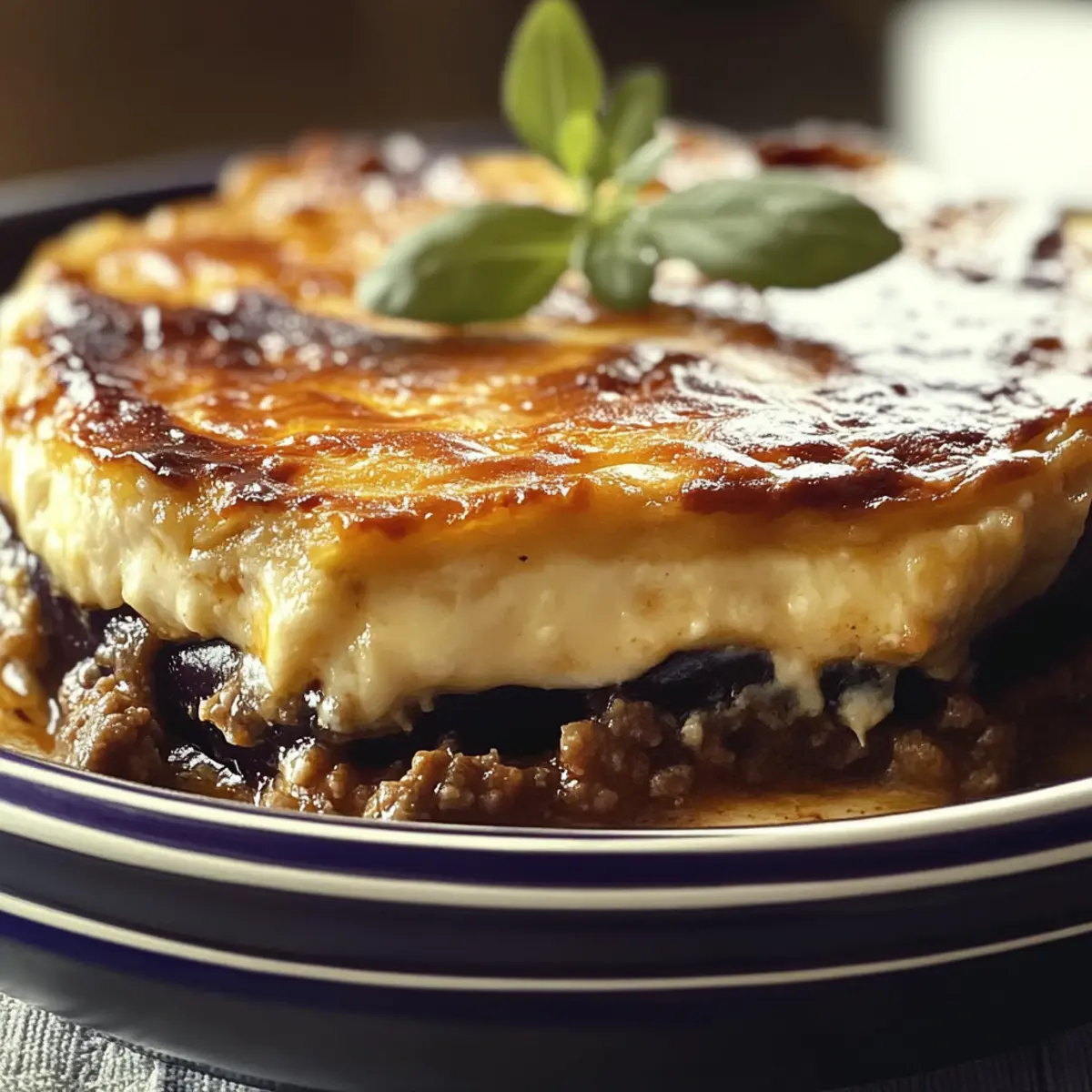
Savory Greek Moussaka: Comfort Food for Cozy Nights
Ingredients
Equipment
Method
- Slice the eggplants, zucchini, and potatoes into even rounds. Sprinkle salt on eggplant slices and let sit for 30 minutes.
- Heat olive oil in a large skillet. Add eggplant, zucchini, and potatoes in batches. Fry until golden brown.
- In a large saucepan, sauté diced onion until translucent. Add minced garlic and ground meat.
- Deglaze with red wine and stir in crushed tomatoes, cinnamon, and nutmeg. Simmer for 10-15 minutes.
- Melt butter in a saucepan, whisk in flour to form a roux, then gradually whisk in milk until thickened.
- Stir in egg yolks, nutmeg, and grated cheese off heat for béchamel.
- Layer potatoes, eggplant, zucchini, and meat sauce in a greased baking dish. Finish with béchamel.
- Preheat oven to 165°C (330°F) and bake for 40-45 minutes until golden brown.
- Allow to rest for at least 30 minutes before slicing.
Leave a Reply