
As I stood in my kitchen, the aroma of toasted sesame oil wafted through the air, instantly transporting me to bustling street markets in Korea where vendors serve warm, flavorful Korean rice balls, known as jumeokbap. These delightful morsels are perfect for anyone seeking a quick meal or an on-the-go snack that kids love just as much as adults. What’s truly exciting about making jumeokbap is their customization—whether you fill them with savory bulgogi or opt for a lighter canned salmon version, each bite offers a unique experience. Not only are these rice balls ready in just 15 minutes, but they’re also a fantastic way to sneak in some nutritious veggies. Want to learn how to create your own batch of these tasty, handheld delights? Let’s dive into the delicious world of jumeokbap!
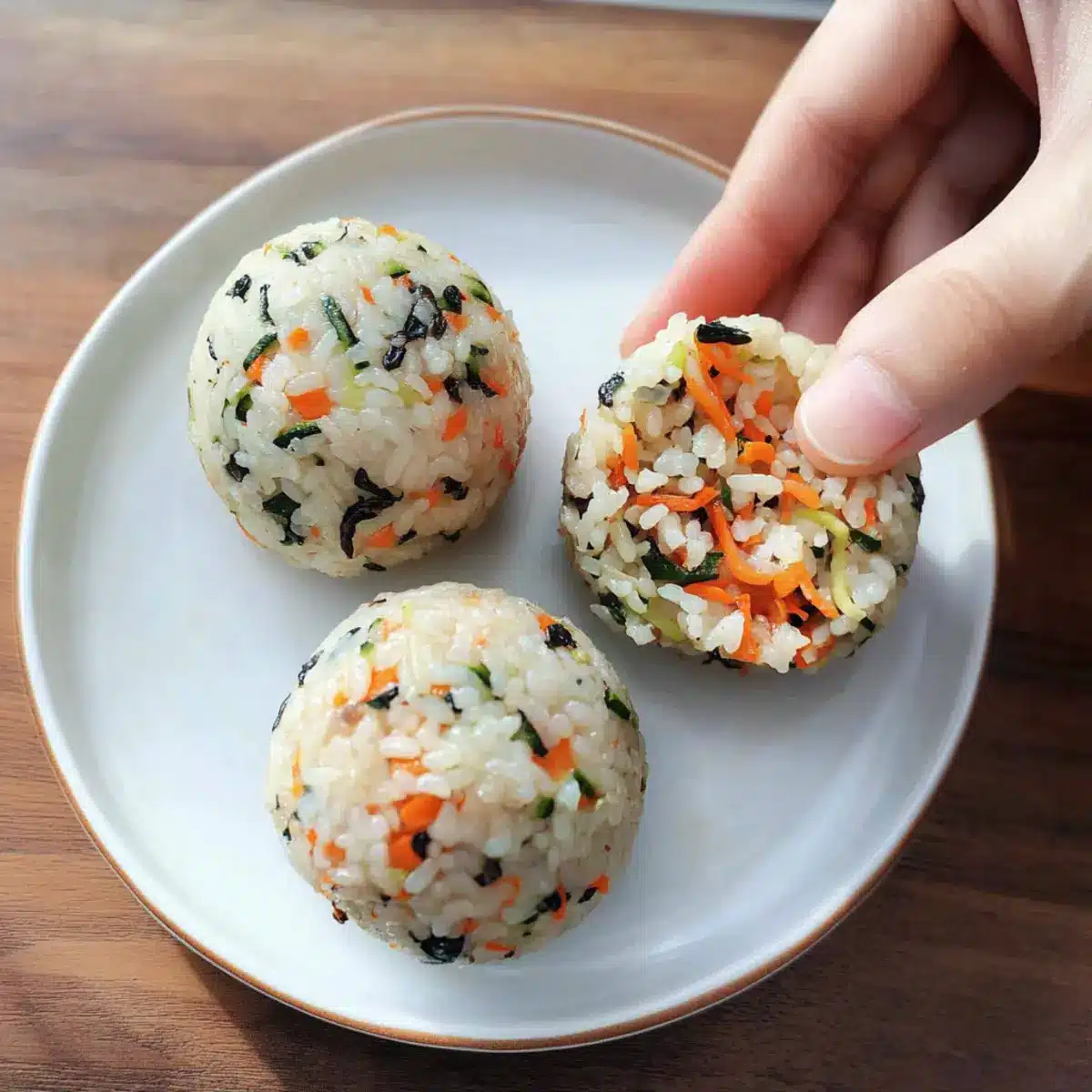
Why Try These Korean Rice Balls?
Customizable to your taste, jumeokbap can be filled with anything from savory bulgogi to healthy canned salmon, making them a hit for everyone in the family. Quick and Easy – ready in just 15 minutes, they’re perfect for busy weekdays. Portable and mess-free, these rice balls are ideal for lunchboxes or snacks on the go. Nutritious as they incorporate veggies, and kid-approved, turning mealtime into a fun experience. Want to explore more easy recipes like Spaghetti Meatballs Homemade or Tofu Fried Rice? Enjoy the delicious journey with jumeokbap!
Korean Rice Balls Ingredients
• Dive into the deliciousness with the perfect combination of flavors!
For the Rice Base
- Cooked Rice – Use short or medium grain for best texture; jasmine or sushi rice also works well for fluffiness.
- Zucchini – Adds moisture and nutrition; feel free to substitute with finely chopped bell peppers or spinach.
- Carrots – Provides sweetness and color; switch with any finely diced vegetable you prefer.
For the Flavoring
- Toasted Sesame Oil – Enhances the nutty flavor; olive or avocado oil can be used for a more neutral taste.
- Seasoned Rice Vinegar – Balances all the flavors; if necessary, combine white vinegar with a pinch of sugar as a substitute.
For the Filling Options
- Bulgogi – Savory and beefy, this is a classic filling that kids love; try cooked tofu or chicken if looking for alternatives.
- Canned Salmon – A lighter option that still packs a punch; any suitable cooked protein can be used instead.
- Japanese or Korean Mayo – Adds a creamy texture to the filling; plain yogurt is an excellent low-calorie alternative.
For Optional Toppings
- Crushed Seaweed Sheets – Brings a burst of umami and texture; you can omit this if you have none on hand.
Whether you’re crafting these Korean rice balls for an afternoon snack or a creative lunch, the possibilities are endless!
Step‑by‑Step Instructions for Korean Rice Balls (Jumeokbap)
Step 1: Sauté the Vegetables
Begin by heating a skillet over medium-high heat. Add 1 teaspoon of toasted sesame oil, letting it shimmer for a moment, then toss in finely chopped zucchini and carrots. Sauté these vibrant vegetables for about 3-4 minutes, stirring occasionally, until they turn tender and slightly golden, releasing a delightful aroma that signals they’re ready to join the rice.
Step 2: Mix the Rice Base
In a large mixing bowl, combine your cooked rice with the sautéed zucchini and carrots. Drizzle in an additional 2 teaspoons of sesame oil and a splash of seasoned rice vinegar to enhance the flavor. Mix everything gently but thoroughly until the rice and veggies are well incorporated, and you can see the distinct colors and textures meld together.
Step 3: Shape the Rice Balls
Now comes the fun part—forming your Korean rice balls! Take approximately 2 tablespoons of the rice mixture and flatten it in your palm. Place a small amount of your chosen filling, whether it’s savory bulgogi or canned salmon, in the center. Top it with a bit more rice and carefully shape it into a compact ball, ensuring the filling is completely enclosed without overstuffing.
Step 4: Continue Shaping More Balls
Repeat the shaping process with the remaining rice mixture, creating a delightful assortment of jumeokbap. If you find the rice sticking to your hands, try wearing food-safe gloves lightly coated with sesame oil to make this task easier. Your beautiful, hand-crafted Korean rice balls are coming together—each one filled with delicious possibilities!
Step 5: Serve or Store the Jumeokbap
Once all your Korean rice balls are formed, you can enjoy them right away or store them for later. If serving immediately, arrange them on a beautiful platter to showcase their vibrant colors. For storage, place jumeokbap in an airtight container and refrigerate for up to 3 days, but be mindful that they are best enjoyed fresh for optimal texture and taste.
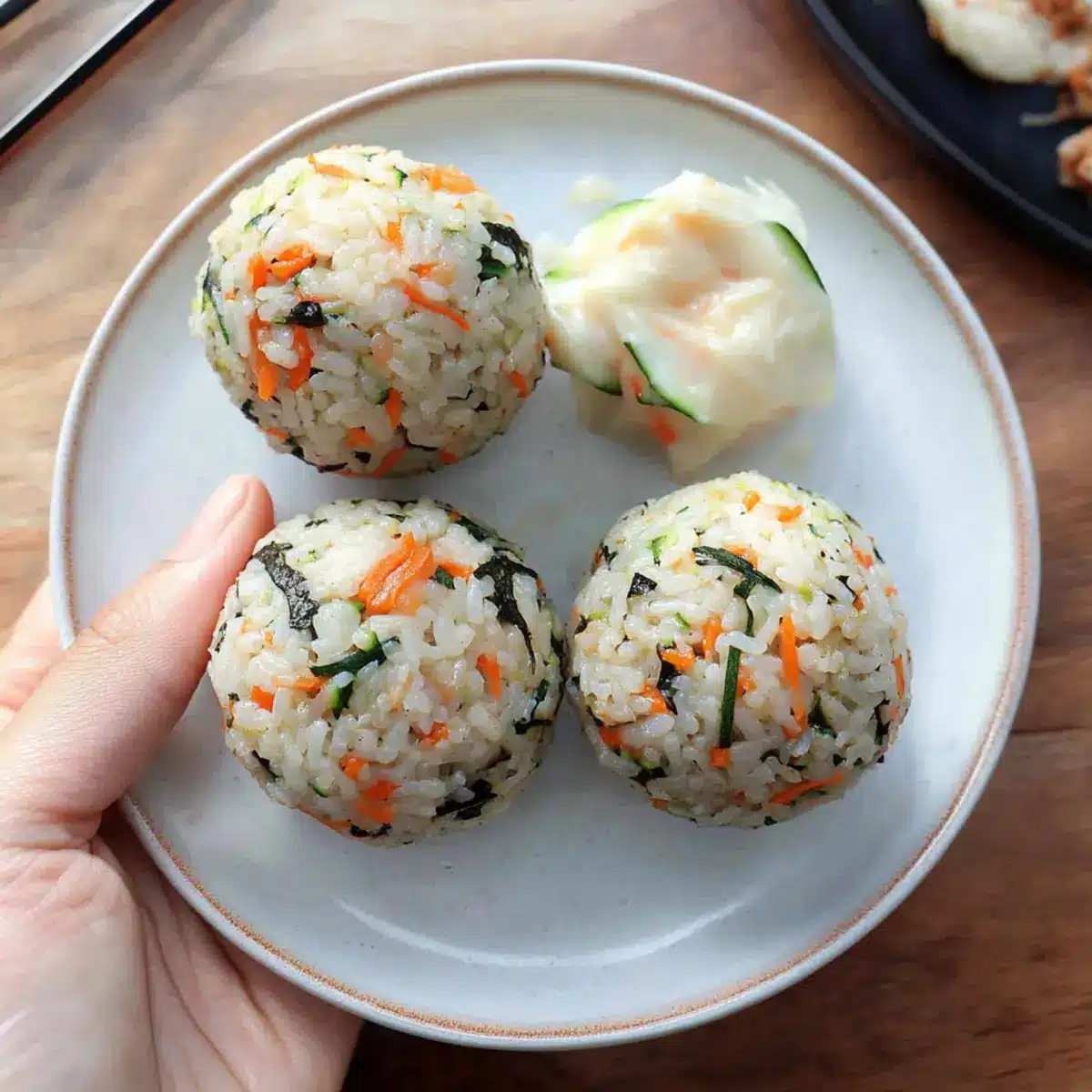
Korean Rice Balls (Jumeokbap) Variations
Feel free to experiment and create your own delicious twists with these jumeokbap that will awaken your taste buds!
- Protein Swap: Use cooked tofu instead of bulgogi or canned salmon to make it vegetarian-friendly.
- Veggie Boost: Add finely chopped bell peppers or spinach for extra nutrition and color—make it your veggie delight!
- Gluten-Free: Substitute rice vinegar with apple cider vinegar to cater to gluten sensitivities, ensuring everyone can enjoy.
A flavor explosion awaits! Why not try your jumeokbap with spicy tuna? It adds a delightful kick, making for a savory treat that will please both kids and adults.
- Herb Infusion: Mix fresh herbs like cilantro or green onions into the rice for an aromatic twist.
- Zesty Flavor: A squeeze of lime juice adds a refreshing zing, brightening the entire dish.
- Heat It Up: Add a sprinkle of chili flakes or sriracha in your filling for a spicy layer that excites the palate.
Explore more wonderful recipes like Chili Tofu Balls or create a filling accompanied by Tofu Fried Rice for a delightful combination. Each of these options will turn your jumeokbap into a beloved family favorite!
Storage Tips for Korean Rice Balls (Jumeokbap)
-
Room Temperature: Serve your jumeokbap fresh and warm for the best experience; however, they can sit at room temperature for up to 2 hours before needing refrigeration.
-
Fridge: Keep your Korean rice balls in an airtight container in the fridge for up to 3 days. This helps maintain their flavor and prevents them from drying out.
-
Freezer: For longer storage, freeze your jumeokbap in a single layer on a baking sheet before transferring them to an airtight freezer bag. They’ll stay good for up to 2 months.
-
Reheating: To reheat, thaw frozen jumeokbap in the fridge overnight, then microwave for about 30 seconds or reheat in a skillet for a warm, fresh taste.
What to Serve with Customizable Jumeokbap?
Pair these flavorful rice balls with just the right accompaniments to complete your meal experience.
- Refreshing Cucumber Salad: The crunchiness and coolness of cucumbers perfectly balance the warm, chewy texture of jumeokbap.
- Steamed Broccoli: This simple side adds a vibrant green touch while enhancing nutrition alongside your tasty rice balls.
- Korean Kimchi: A classic pairing that brings tanginess and spice to the dish, elevating its flavor profile to new heights.
- Savory Miso Soup: The warmth and umami of miso soup harmonize beautifully with the soft, fulfilled rice balls—perfect for cozy meals.
- Fruit Skewers: Fresh, colorful fruit adds a sweet and refreshing contrast; they also make for a visually appealing presentation.
- Green Tea: A soothing drink that cleanses the palate and complements the savory flavors of your jumeokbap wonderfully.
- Dipping Sauce Trio: Serve with a mix of soy sauce, spicy gochujang sauce, and sweet chili sauce for a burst of flavor with each bite.
- Japanese Pickles: Providing a delightful crunch and zing, they offer a palate-cleansing experience perfect between each rice ball.
Make Ahead Options
These Korean rice balls (jumeokbap) are ideal for meal prep enthusiasts looking to save time! You can prepare the rice mixture, including the sautéed vegetables, up to 24 hours in advance, refrigerating it in an airtight container. Additionally, you can form the rice balls and store them in the fridge for up to 3 days; just remember to keep them covered to maintain their moisture. When you’re ready to serve, allow the rice balls to sit at room temperature for a bit to soften, then enjoy them chilled or at room temperature. This way, you can savor the delicious flavors of jumeokbap without the last-minute rush!
Expert Tips for Korean Rice Balls
-
Rice Selection: Choose short or medium grain rice for the best texture; jasmine or sushi rice are excellent substitutes for fluffiness.
-
Don’t Overstuff: Avoid overstuffing the rice balls with filling; it can make shaping difficult and lead to spills when eating.
-
Use Gloves: Shaping jumeokbap can be sticky. Wearing food-safe gloves coated with a bit of sesame oil makes the process mess-free and easy.
-
Freshness Matters: For the best taste and texture, enjoy your Korean rice balls the same day they’re made; they can harden if stored too long.
-
Creative Fillings: Feel free to experiment with various fillings, such as different proteins or finely chopped veggies, to cater to your family’s tastes.
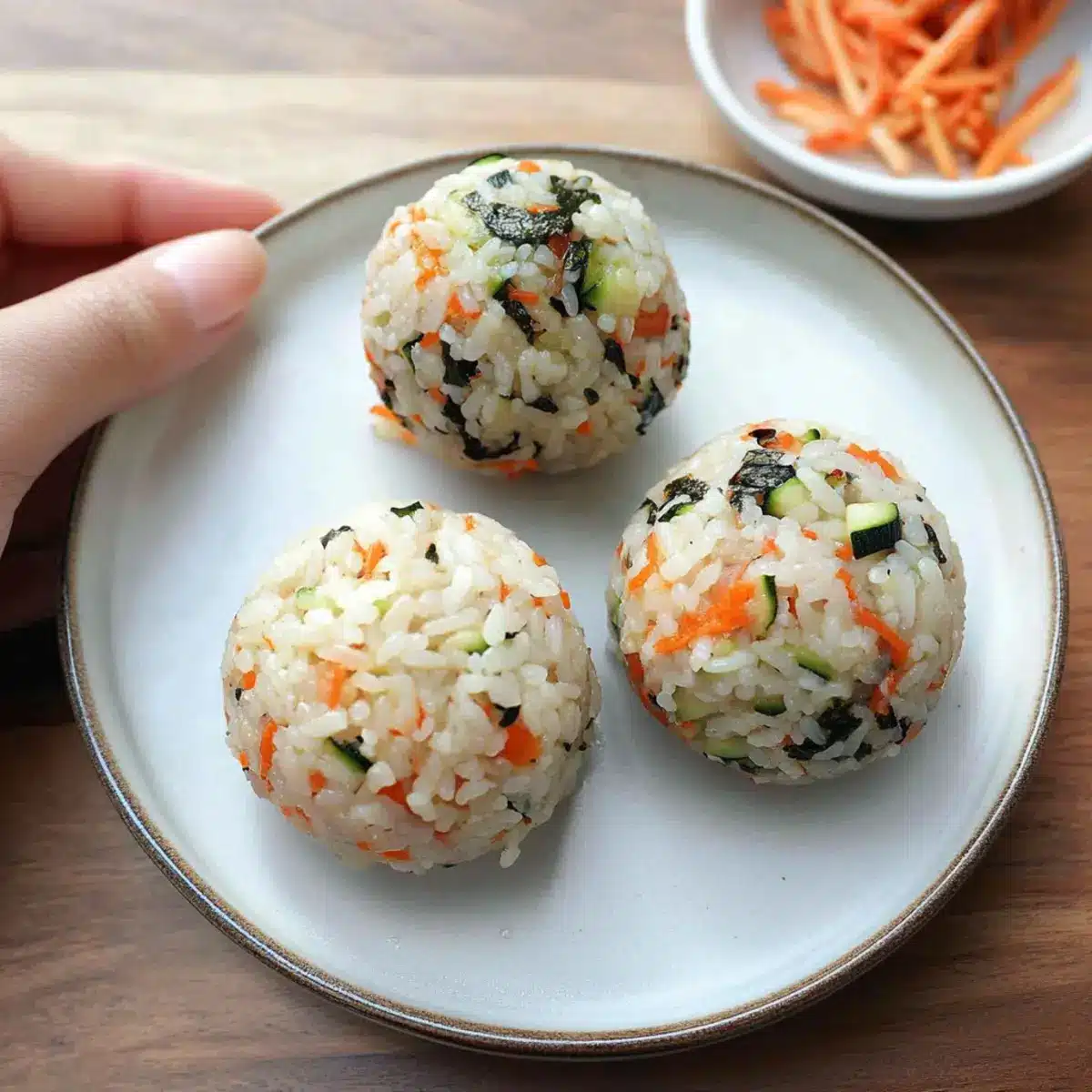
Korean Rice Balls (Jumeokbap) Recipe FAQs
How do I know if my ingredients are fresh?
For the best flavor and texture, choose fresh produce; look for zucchini and carrots that are firm and vibrant, avoiding those with dark spots or wrinkles. The rice should be aromatic and free from any musty smell.
How should I store leftover jumeokbap?
Keep your Korean rice balls in an airtight container in the fridge for up to 3 days. This will help them stay moist and flavorful. When ready to eat, let them come to room temperature for a short while to enhance their texture.
Can I freeze jumeokbap?
Absolutely! To freeze, place your formed rice balls in a single layer on a baking sheet to prevent sticking, then freeze for about 1-2 hours until firm. Transfer them to an airtight freezer bag, where they’ll stay fresh for up to 2 months. When ready to eat, thaw in the fridge overnight and reheat before serving for the best experience.
What if my jumeokbap are falling apart?
If your Korean rice balls are crumbling, it may be due to the rice being too dry or not enough compression during shaping. Ensure your rice is sticky and slightly warm when forming them. If they still fall apart, try adding a bit more seasoned rice vinegar to help bind everything together.
Can my dog eat jumeokbap?
While your furry friend might be interested in sharing a bite, be cautious with the ingredients. Avoid giving them any fillings like bulgogi or mayonnaise. Instead, offer them plain rice or veggies like zucchini and carrots in moderation as a treat.
How can I make jumeokbap gluten-free?
To create gluten-free Korean rice balls, ensure you use gluten-free soy sauce or skip it entirely. Also, choose gluten-free mayonnaise as a substitute if you want to keep the creamy texture.
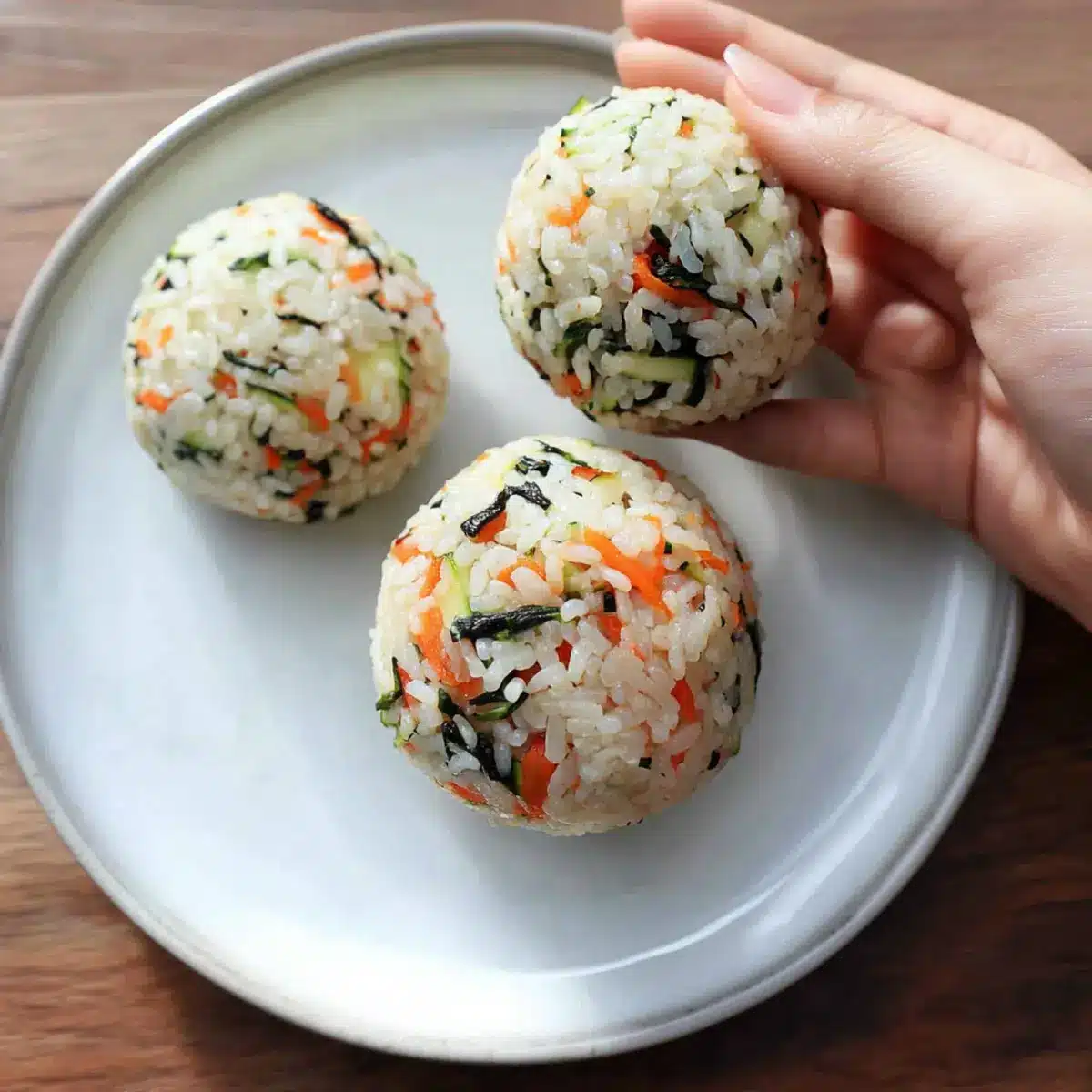
Korean Rice Balls (Jumeokbap) Packed with Flavor & Fun
Ingredients
Equipment
Method
- Begin by heating a skillet over medium-high heat. Add 1 teaspoon of toasted sesame oil, then toss in finely chopped zucchini and carrots. Sauté for about 3-4 minutes until tender.
- In a large mixing bowl, combine cooked rice with the sautéed vegetables. Drizzle in 2 teaspoons of sesame oil and a splash of seasoned rice vinegar. Mix gently until well incorporated.
- Take approximately 2 tablespoons of the rice mixture, flatten it in your palm, add your chosen filling in the center, then shape it into a compact ball, ensuring the filling is enclosed.
- Repeat the shaping process with the remaining rice mixture to create more jumeokbap. Use food-safe gloves lightly coated with sesame oil if the rice sticks to your hands.
- Enjoy your jumeokbap immediately or store them. For serving, arrange on a platter, or for storage, keep in an airtight container in the fridge for up to 3 days.
Leave a Reply